46
National patents
Custom commercial bathroom flooring begins with selecting a material system that matches the environmental stresses of the space, including exposure to water, cleaning chemicals, and foot traffic
Order this product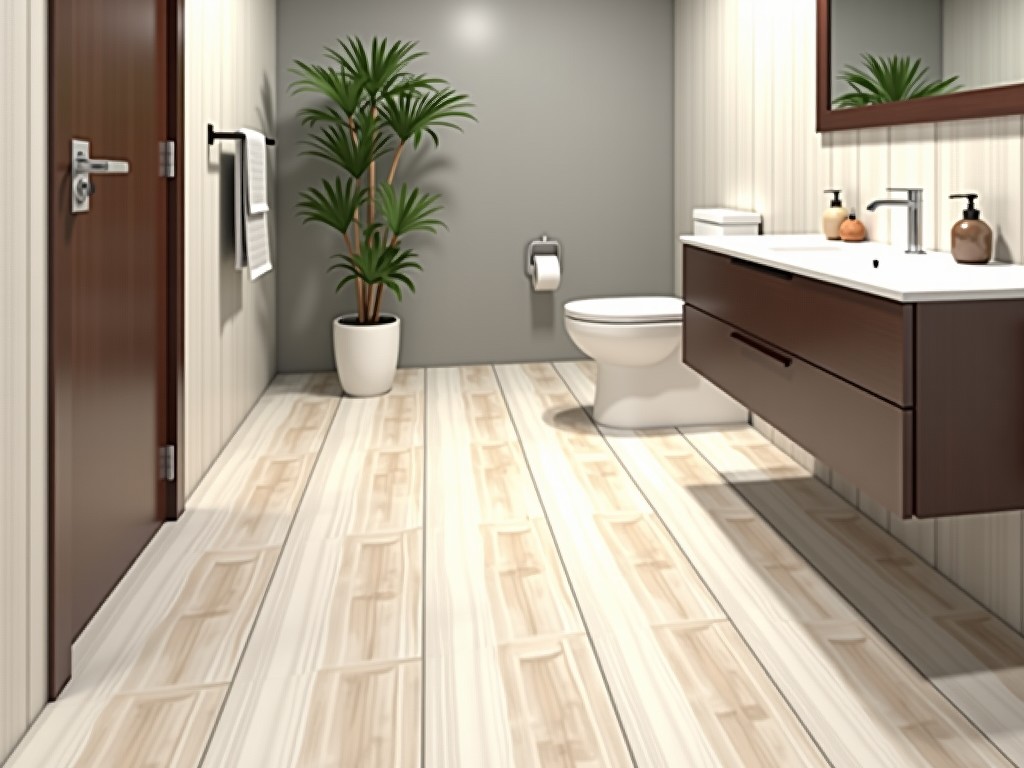
Custom commercial bathroom flooring begins with selecting a material system that matches the environmental stresses of the space, including exposure to water, cleaning chemicals, and foot traffic loads. Engineers specify measurable performance targets such as dynamic coefficient of friction (DCOF) for slip resistance and water absorption rate to limit microbial growth. The final product is fabricated to precise dimensions and surface finishes that satisfy both functional and design criteria.
Four primary material families dominate commercial bathroom applications: porcelain tile, luxury vinyl tile (LVT), epoxy resin flooring, and rubber sheet. Each family offers a distinct combination of mechanical strength, chemical resistance, and surface texture that can be quantified through standardized tests.
Thickness can be adjusted from 6 mm for thin‑set tile installations to 20 mm for poured‑in‑place epoxy systems, allowing designers to match substrate condition and anticipated load. Larger format panels reduce joint frequency, improving cleaning efficiency, while edge treatments such as beveled, square, or coved profiles influence water containment and maintenance effort.
Hospital bathrooms demand seamless, non‑porous surfaces with high chemical resistance and DCOF > 0.45 to support infection‑control protocols; epoxy flooring meets these criteria with monolithic curing and optional antimicrobial additives. Hotel guest bathrooms prioritize visual appeal and acoustic comfort, making LVT with printed wood or stone looks a common choice due to its low impact noise transmission. School facilities require impact resistance and easy maintenance, leading to the use of through‑body porcelain tile that withstands heavy loads and frequent cleaning with neutral pH detergents. Gym locker rooms benefit from rubber sheet flooring that provides shock absorption (20‑35 %) and retains slip resistance even when wet from showers or pool areas.
| Property | Porcelain Tile | Luxury Vinyl Tile | Epoxy Resin | Rubber Sheet |
|---|---|---|---|---|
| Water Absorption (%) | ≤0.5 | 0 | 0 | 0 |
| Compressive Strength (MPa) | ≥30 | 15‑20 | 50‑80 | 5‑10 |
| DCOF (wet) | 0.45‑0.60 | 0.42‑0.55 | 0.48‑0.62 | 0.50‑0.70 |
| Wear Rating (PEI) | 4‑5 | N/A | N/A | N/A |
| Chemical Resistance (ASTM D1308) | Good | Good‑Excellent | Excellent | Good |
Dimensional tolerances are maintained at ±0.5 mm for thickness and ±1.0 mm for length/width to ensure proper joint alignment and grout line uniformity. Surface flatness is verified with a 2 m straightedge, accepting deviations no greater than 1 mm. Slip resistance is measured using the ASTM E303 pendulum method, targeting a minimum DCOF of 0.42 for wet conditions. Water absorption follows ASTM C373 for tile and equivalent immersion tests for polymeric materials, while chemical resistance is evaluated per ASTM D1308 with exposure to common cleaning agents for 24 hours.
Yes. Tiles and panels can be cut to specific lengths and widths within the standard tolerance range, and custom molds are available for poured‑in‑place epoxy to accommodate irregular perimeters.
Project square footage, desired material family, thickness range, slip‑resistance target (DCOF), chemical exposure list, and any aesthetic constraints such as color or pattern specifications.
Textured finishes incorporating silicon carbide or alumina aggregates typically achieve DCOF values above 0.55; honed or polished finishes fall below 0.40 and are not recommended for wet zones without additional treatment.
To begin a technical review, share your project specifications via the contact form. Our engineering team will return a detailed material recommendation, thickness proposal, and lead‑time estimate within two business days.
Request Technical QuoteNational patents
Vinyl flooring line
K+ SQ.M capacity
Founded