46
National patents
In environments where foot traffic is constant and spill potential is high, flooring must maintain a reliable coefficient of friction (COF) under both wet and dry conditions. Slip resistance is
Order this product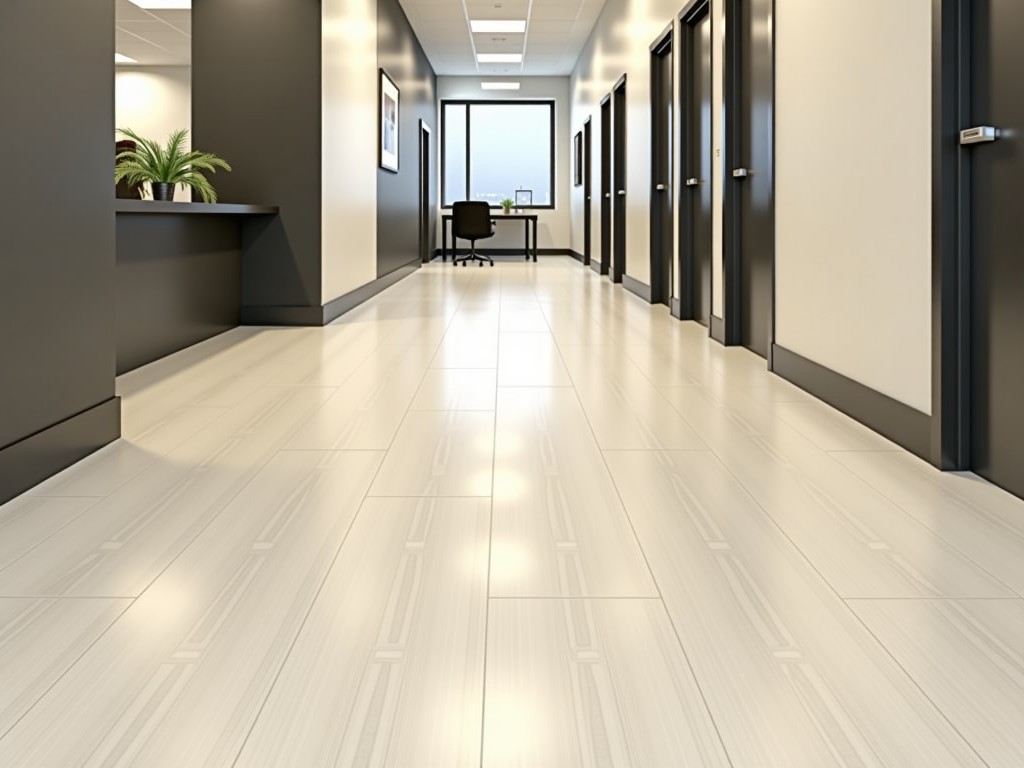
In environments where foot traffic is constant and spill potential is high, flooring must maintain a reliable coefficient of friction (COF) under both wet and dry conditions. Slip resistance is quantified by standardized tests such as ASTM E303 (British Pendulum) or DIN 51130 (R‑scale), with values above 0.45 generally considered acceptable for commercial areas.
Material selection begins with choosing a polymer base that balances durability, flexibility, and chemical resistance. Common bases include polyvinyl chloride (PVC) with plasticizer blends, vulcanized rubber, and thermoplastic polyurethane (TPU), each available in thicknesses ranging from 2 mm to 5 mm depending on expected load.
Surface texture is engineered to achieve target COF values without compromising wear resistance. Techniques include controlled embossing patterns, incorporation of silica or aluminum oxide aggregates, and micro‑roughening via laser etching, producing measurable COF ranges of 0.5–0.7 (wet) and 0.6–0.8 (dry) for typical formulations.
Customization extends to dimensional tolerances, color matching, and graphic integration. Panels can be cut to lengths up to 3 m with width increments of 50 mm, while surface pigments are matched to Pantone or RAL specifications; logos or safety symbols can be embedded via in‑mould printing or post‑cure screen printing.
Installation requires a clean, level substrate with compressive strength ≥ 25 MPa. Adhesive selection varies by base material: pressure‑sensitive acrylics for PVC, polyurethane‑based adhesives for rubber, and reactive methacrylates for TPU, ensuring shear strength ≥ 1.5 MPa after 24 h cure.
Maintenance protocols focus on preserving the engineered texture. Routine cleaning with neutral pH detergents and low‑pressure scrubbing prevents aggregate depletion; periodic deep cleaning with alkaline solutions (pH ≤ 10) removes embedded contaminants without degrading the polymer matrix.
Applications benefit from the flooring’s ability to handle dynamic loads while maintaining safety. In retail environments, the material resists indentation from rolling carts up to 250 kg; in healthcare corridors, it withstands frequent wheeled equipment and resists staining from iodine‑based disinfectants; in educational facilities, it provides consistent slip resistance under varying humidity conditions.
Each production lot undergoes in‑line COF testing using a portable pendulum tester, with acceptance criteria set at ± 0.05 of the target value. Additionally, abrasion resistance is measured per ASTM D4060 (Taber abraser), targeting a weight loss ≤ 0.02 g per 1000 cycles for high‑traffic grades.
| Property | Typical Range | Test Standard |
|---|---|---|
| Coefficient of Friction (wet) | 0.48 – 0.62 | ASTM E303 |
| Coefficient of Friction (dry) | 0.55 – 0.78 | ASTM E303 |
| Thickness | 2 mm – 5 mm | ISO 24346 |
| Abrasion loss (1000 cycles) | ≤ 0.02 g | ASTM D4060 |
| Tensile strength | ≥ 12 MPa | ISO 527‑1 |
To discuss specific project requirements or request a sample panel, please use the contact form below.
Request Quote or SampleNational patents
Vinyl flooring line
K+ SQ.M capacity
Founded