46
National patents
In environments where foot traffic exceeds several thousand passages daily, flooring must resist abrasion, retain dimensional stability, and simplify maintenance over years of service. Selecting a
Order this product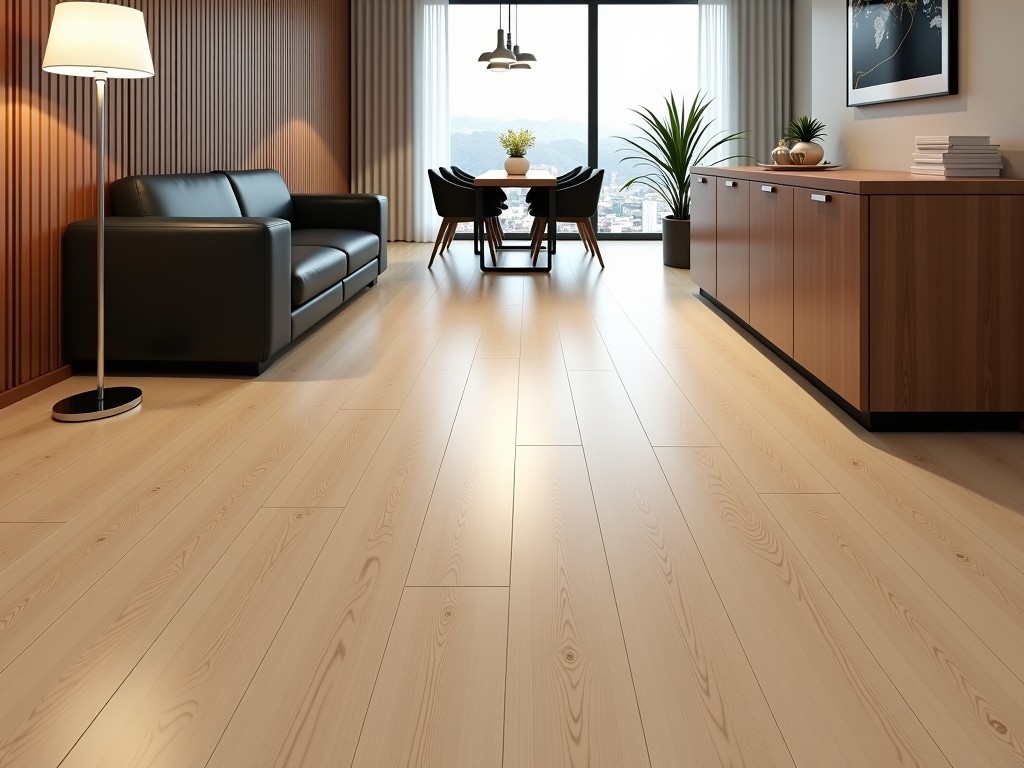
In environments where foot traffic exceeds several thousand passages daily, flooring must resist abrasion, retain dimensional stability, and simplify maintenance over years of service. Selecting a product based on measurable performance criteria reduces the risk of premature replacement and unplanned downtime. This page outlines the engineering attributes that define suitable flooring for such demanding settings.
| Property | Typical Value | Test Standard |
|---|---|---|
| Wear layer thickness | 0.8 mm | ASTM F410 |
| Abrasion loss (Taber) | 65 mg/1000 cycles | ASTM D4060 |
| Compressive strength | 28 MPa | ASTM D695 |
| Slip resistance (R‑value) | R11 | DIN 51130 |
| Fire class | Bfl‑s1 | EN 13501‑1 |
| Total VOC emissions | <0.5 mg/m³ | ISO 16000‑9 |
Retail environments experience constant trolley movement and occasional spills; a wear layer above 0.6 mm combined with R11 slip resistance minimizes both surface degradation and slip hazards. Healthcare facilities demand flooring that tolerates frequent disinfectant cleaning without chemical attack; homogeneous vinyl’s non‑porous surface resists absorption of aggressive agents while maintaining a seamless finish. Educational institutions benefit from low‑emission materials that contribute to indoor air quality, with verified VOC levels below occupational thresholds, supporting compliance with green building standards.
Proper substrate preparation is critical; moisture content must remain below 75 % relative humidity to prevent adhesive failure, and surface flatness should not exceed 3 mm deviation over a 2 m radius. Expansion joints are recommended at intervals of 8‑10 m for large sheets to accommodate thermal movement, particularly in regions with seasonal temperature swings exceeding 15 °C. Adhesive selection should align with the flooring backing type—pressure‑sensitive for loose‑lay, or epoxy‑based for permanent bonding in wet zones.
Each production lot undergoes inline thickness monitoring using laser gauges, ensuring wear layer uniformity within ±0.05 mm. Finished panels are sampled for abrasion resistance per ASTM D4060, with acceptance criteria set at a maximum 80 mg loss. Slip resistance is verified using a pendulum tester, targeting a minimum R10 rating. Documentation of test results accompanies every shipment, providing traceability for project audits.
Clients may specify wear layer thickness from 0.5 mm to 1.2 mm to match expected load profiles. Color palettes are adjustable through pigment concentration, allowing corporate branding integration without compromising durability. Edge treatments include beveled, square, or recessed profiles to facilitate seamless transitions with adjacent materials such as carpet or tile. Surface embossing can be tailored to enhance slip resistance or achieve specific aesthetic textures.
For detailed specifications, sample requests, or project‑specific engineering support, please reach out to our technical team. Provide your application details, and we will respond with applicable performance data and customization options.
National patents
Vinyl flooring line
K+ SQ.M capacity
Founded