46
National patents
Commercial vinyl plank flooring is a multi‑layer engineered product designed for high‑traffic industrial settings. Each plank consists of a wear layer, a printed design layer, a rigid or resilient
Order this product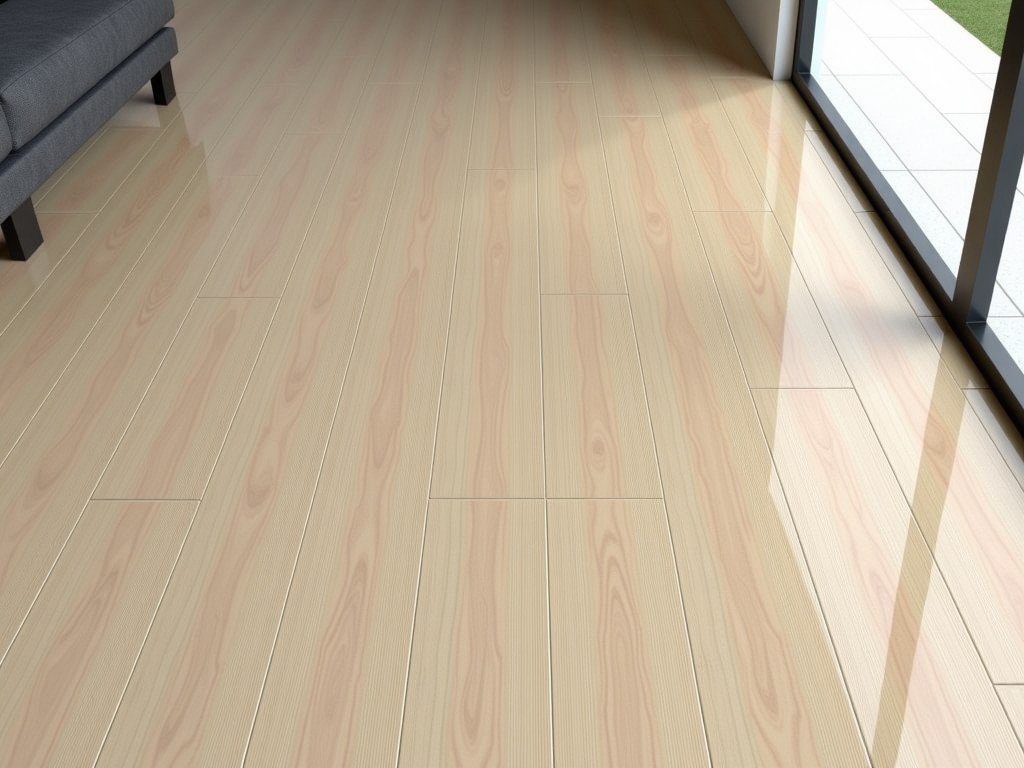
Commercial vinyl plank flooring is a multi‑layer engineered product designed for high‑traffic industrial settings. Each plank consists of a wear layer, a printed design layer, a rigid or resilient core, and a backing layer that together provide resistance to abrasion, impact, moisture, and chemical exposure.
The wear layer is typically a transparent polyurethane coating with a thickness ranging from 0.3 mm to 0.7 mm, measured per ASTM D4060. Below it, a high‑definition photographic layer replicates wood, stone, or concrete visuals. The core may be either a stone‑plastic composite (SPC) with a density of 1.9–2.1 g/cm³ or a wood‑plastic composite (WPC) with a density of 1.4–1.6 g/cm³, providing dimensional stability under temperature fluctuations. A balanced backing layer, often PVC or cork, adds acoustic dampening and mitigates subfloor irregularities.
| Property | Test Method | Typical Value | Units |
|---|---|---|---|
| Abrasion resistance | ASTM D4060 (Taber) | ≤ 0.02 g loss per 1000 cycles | g |
| Dimensional stability (heat) | ISO 23999 | ≤ 0.15 % after 6 h at 80 °C | % |
| Slip resistance | DIN 51130 (R‑value) | R10 | – |
| Fire rating | EN 13501-1 | Bfl‑s1 | – |
| Total thickness | Caliper measurement | 4.5 – 6.0 | mm |
Two primary installation methods are available: a click‑lock system that allows floating placement over approved substrates, and a glue‑down option using a pressure‑sensitive adhesive for permanent fixation. Subfloor flatness should not exceed 3 mm deviation over a 2 m radius, and relative humidity must be maintained between 40 % and 60 % during acclimation. Expansion gaps of at least 5 mm around perimeter walls are recommended to accommodate thermal movement.
The product’s resistance to oils, solvents, and mild acids makes it suitable for manufacturing plants where spillage is common. Its high compressive strength (up to 25 MPa) supports pallet racking and heavy equipment loads without permanent indentation. In warehouses, the low‑maintenance surface reduces dust accumulation and facilitates cleaning with automated scrubbers. For food‑processing zones, phthalate‑free formulations and antimicrobial surface treatments meet FDA and EU hygiene standards.
Incoming raw material is verified for PVC purity and plasticizer content using FTIR spectroscopy. During extrusion, inline laser gauges monitor core thickness with a tolerance of ±0.05 mm. After lamination, each batch undergoes a Taber abrasion test on five random samples; the average weight loss must not exceed the specification limit. Peel adhesion between wear layer and print film is measured per ASTM D903, requiring a minimum of 1.5 N/mm. Final inspection includes visual defect scoring under 500 lux lighting, with a maximum allowable defect rate of 0.2 % per production run.
Wear layer thickness can be adjusted from 0.3 mm to 0.7 mm to match specific abrasion expectations. Embossing registers are interchangeable, allowing reproduction of hand‑scraped, brushed, or stone‑tile textures. Edge profiles include square, beveled, or micro‑bevel options, influencing joint visibility and cleaning efficiency. Color matching is performed via spectrophotometer to achieve ΔE < 2.0 against a client‑provided sample. Custom backing materials, such as recycled cork or acoustic foam, are available upon request to meet specific sound‑transmission class (STC) targets.
The formulation is free of ortho‑phthalates, heavy metals, and formaldehyde. Volatile organic compound emissions are measured per CDPH/EHLB/Standard Method V1.1, typically registering below 0.5 mg/m³, qualifying for FloorScore certification. Post‑consumer scrap can be re‑granulated and re‑introduced into the core extrusion loop, supporting a closed‑loop recycling pathway. Product safety data sheets are provided for each configuration, detailing handling procedures and disposal guidelines.
Minimum order quantity starts at 500 m² for stocked designs; custom runs require a minimum of 2000 m². Sample panels (100 mm × 100 mm) are shipped via express courier within 3 business days after receipt of technical specifications. Production lead time for standard finishes averages 18–22 working days, while custom embossing or color matches may extend to 28–35 days. Finished goods are packed on Euro‑pallets, stretch‑wrapped, and corner‑protected for secure transport.
For detailed technical data sheets, sample requests, or project‑specific consultation, reach out to our engineering team via the contact portal.
Submit Technical InquiryNational patents
Vinyl flooring line
K+ SQ.M capacity
Founded