46
National patents
Vinyl commercial tile flooring is manufactured as rigid or flexible planks that interlock or are adhered to substrate surfaces. The product consists of a PVC base layer, a printed design layer, and a
Order this product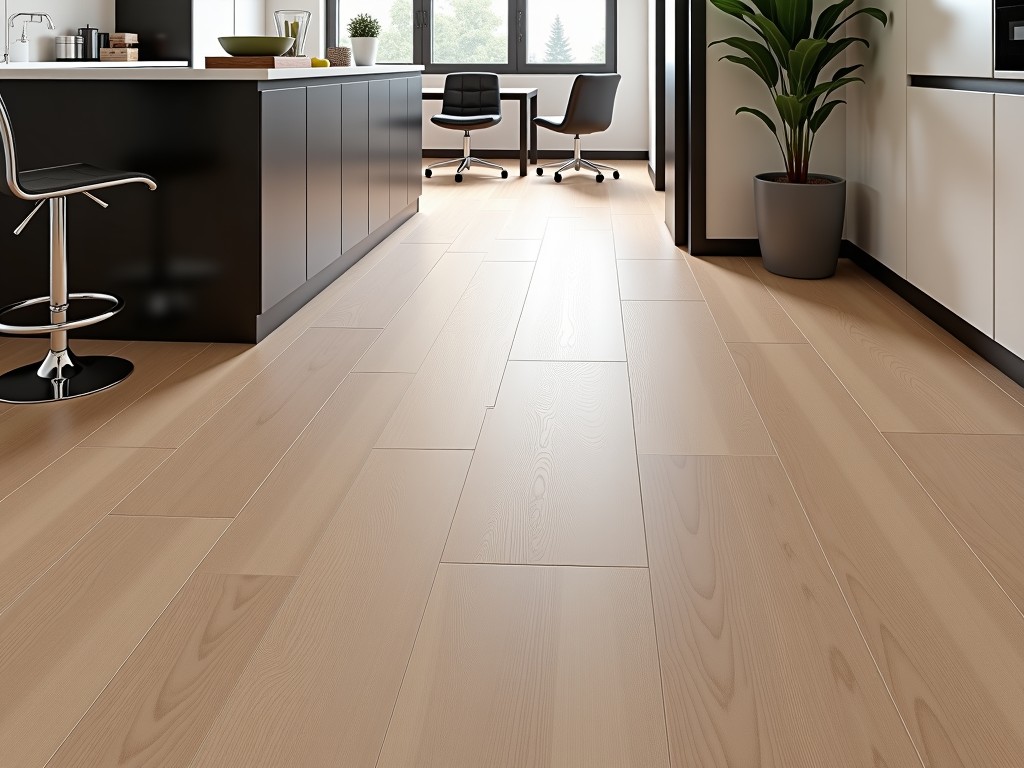
Vinyl commercial tile flooring is manufactured as rigid or flexible planks that interlock or are adhered to substrate surfaces. The product consists of a PVC base layer, a printed design layer, and a wear layer that determines surface durability. Thickness, wear layer thickness, and surface texture are adjustable to meet specific load and slip‑resistance requirements.
The core layer is typically a polyvinyl chloride (PVC) compound blended with plasticizers and stabilizers to achieve flexibility and dimensional stability. Above the core, a high‑resolution photographic layer reproduces wood, stone, or abstract patterns. The wear layer is a clear polyurethane coating whose thickness ranges from 0.3 mm to 0.7 mm depending on the expected foot traffic.
Key performance indicators are derived from standardized tests such as ASTM F1700 for classification and EN 13329 for wear resistance. The product is classified according to its wear group, which predicts service life under specified traffic conditions.
| Parameter | Typical Range | Test Standard |
|---|---|---|
| Wear Group | T, M, P (light to heavy) | EN 13329 |
| Static Load Limit | Up to 250 psi (depends on thickness) | ASTM F970 |
| Slip Resistance (R value) | R9 to R13 (surface texture dependent) | DIN 51130 |
| Dimensional Stability | ≤0.25 % after heat aging | ASTM F2199 |
Vinyl tile flooring is selected for environments where moisture resistance, ease of maintenance, and design flexibility are critical. The product’s wear layer protects against abrasion from rolling loads, while its closed‑cell PVC core prevents water ingress.
Because the product is sourced directly from the factory, specifications can be adjusted to match project constraints without intermediary mark‑ups. Adjustments are made during the extrusion and printing stages, ensuring consistency across large batches.
Quality control begins with raw material testing for PVC purity and plasticizer content. In‑line thickness gauges monitor core and wear layer dimensions during extrusion. After printing, automated vision systems verify pattern registration and color consistency.
Tiles are packed in corrugated cardboard boxes with internal polyethylene liners to protect against moisture during transit. Palletization follows ISPM‑15 standards for international shipments.
Yes. Length, width, and thickness are adjusted according to project specifications; tooling changes are performed before production starts.
Intended application area, expected traffic class, desired tile size, wear layer preference, and any required certifications or test reports.
Standard wear layer thicknesses are 0.3 mm, 0.5 mm, and 0.7 mm; intermediate values can be supplied upon request.
In‑line gauges check thickness, vision systems verify print registration, and final audits assess dimensional tolerances, wear layer consistency, and slip‑resistance parameters.
Lead time ranges from 2 to 4 weeks depending on order size and customization level; exact timing is confirmed at quote stage.
To request a detailed specification sheet, sample arrangement, or project‑specific quotation, please provide the following: intended application area, expected traffic class, desired tile size, and any required certifications.
Submit InquiryNational patents
Vinyl flooring line
K+ SQ.M capacity
Founded