46
National patents
In busy restaurant kitchens, flooring must resist constant exposure to oils, acidic spills, and frequent mopping while providing a safe walking surface. The tiles described here combine a dense
Order this product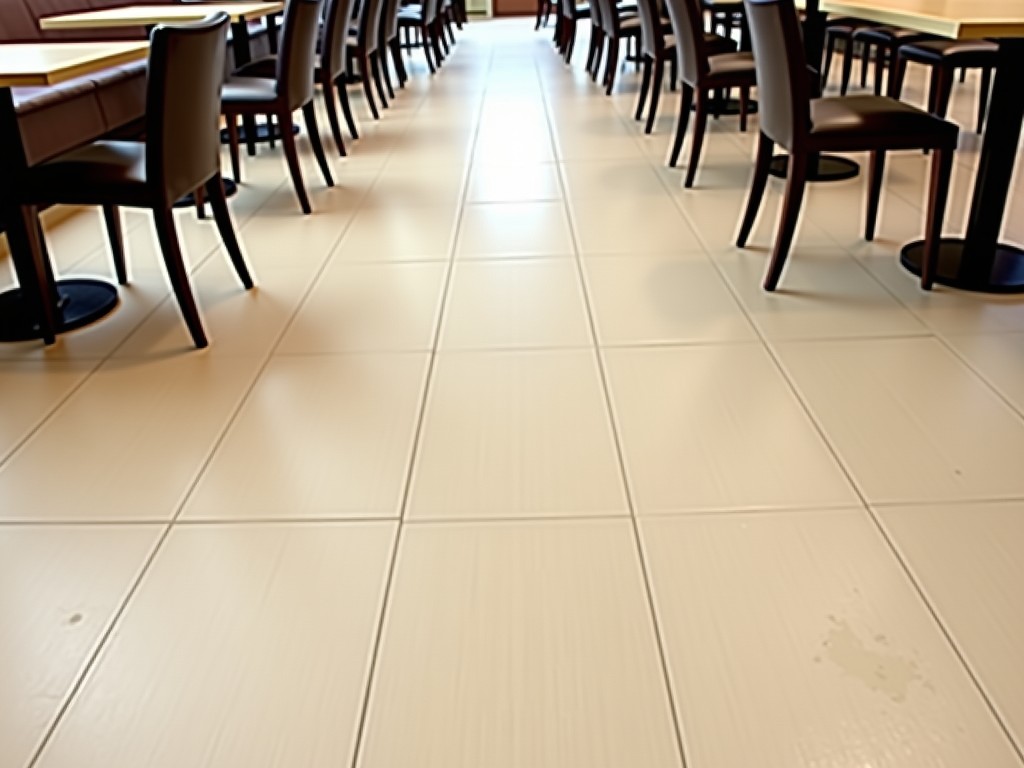
In busy restaurant kitchens, flooring must resist constant exposure to oils, acidic spills, and frequent mopping while providing a safe walking surface. The tiles described here combine a dense porcelain body with a surface texture that meets slip‑resistance thresholds for wet areas.
The base material is a vitrified porcelain blend fired above 1200 °C, resulting in low porosity. Typical water absorption measured by ASTM C373 is 0.5 % or less, which limits staining and bacterial growth.
Compressive strength, determined via ASTM C648, averages 35 MPa, allowing the tiles to sustain point loads from heavy equipment without cracking. Flexural strength usually exceeds 5 MPa, contributing to impact resistance.
Surface abrasion is rated using the PEI scale; these tiles commonly achieve a PEI 4 classification, suitable for moderate to heavy foot traffic found in dining areas and service corridors.
| Property | Typical Value | Reference Test |
|---|---|---|
| Water absorption | ≤ 0.5 % | ASTM C373 |
| Compressive strength | ≥ 30 MPa | ASTM C648 |
| Slip resistance (wet) | R ≥ 0.6 | ASTM C1028 |
| PEI rating | 4 | ASTM C1027 |
| Thickness | 8 – 12 mm | Manufacturer spec |
| Common sizes | 300 × 300 mm, 400 × 400 mm | Project dependent |
Dining rooms benefit from the tile’s stain‑resistant surface, which allows quick removal of wine, sauce, and coffee spills without leaving permanent marks. In kitchen preparation zones, the low water absorption prevents microbial harborage in grout lines when sealed properly.
Service corridors and storage areas experience frequent pallet movement; the high compressive strength reduces the risk of edge chipping under point loads from carts and racks.
Each production lot undergoes dimensional sorting to ensure width and length variation stays within ±0.5 %, facilitating tight grout joints. Visual inspection checks for glaze uniformity, pinholes, and color consistency under standardized lighting.
Mechanical testing is performed on a random sample basis; results are logged and compared against the specification table above. Any batch failing to meet the minimum compressive strength or water absorption thresholds is held for re‑evaluation.
Tiles are stacked on pallets with interlocking corner protectors and wrapped in stretch film to prevent shifting during transit. Each pallet carries a label indicating product code, size, quantity, and batch number for traceability.
For overseas shipments, the exporter provides fumigated wooden pallets or plastic pallets compliant with ISPM‑15, and includes a moisture‑barrier sheet inside the wrapping to protect against condensation during sea freight.
To receive a detailed quotation, please provide your project specifications, required quantity, and delivery location.
Request a QuotationNational patents
Vinyl flooring line
K+ SQ.M capacity
Founded