46
National patents
In commercial kitchens, flooring must withstand constant foot traffic, exposure to hot oils, frequent cleaning with alkaline detergents, and occasional impact from dropped utensils. The material
Order this product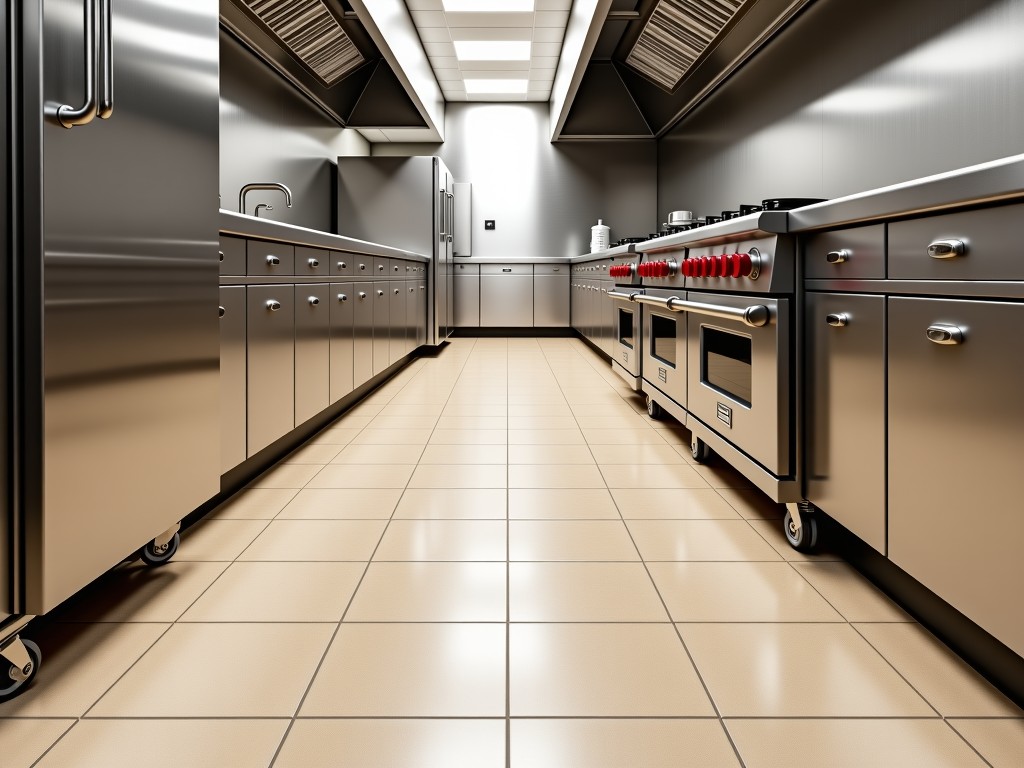
In commercial kitchens, flooring must withstand constant foot traffic, exposure to hot oils, frequent cleaning with alkaline detergents, and occasional impact from dropped utensils. The material selected affects slip resistance, hygiene maintenance, and long-term replacement cost. This page outlines the technical attributes that influence performance in such environments.
Typical flooring for heavy-duty kitchens uses a homogeneous vinyl composite or a reinforced polyurethane wear layer over a PVC backing. The wear layer thickness ranges from 0.5 mm to 1.5 mm, directly influencing abrasion resistance measured by Taber abrasion test (cycles to failure). Backing density typically falls between 1.2 g/cm³ and 1.4 g/cm³, contributing to dimensional stability under temperature fluctuations.
| Property | Typical Value | Test Standard |
|---|---|---|
| Slip Resistance | R10 (DIN 51130) | DIN 51130 |
| Abrasion Resistance | ≥ 2000 cycles (Taber CS‑17) | ASTM D4060 |
| Chemical Resistance | No visible change after 24 h exposure to 10 % NaOH | ISO 2812‑1 |
| Thermal Shock Resistance | Withstands –20 °C → +80 °C cycles without cracking | Internal cycling test |
| Impact Resistance | ≥ 10 J (drop‑weight test) | ASTM D2444 |
| VOC Emission | < 0.5 mg/m³ | ISO 16000‑9 |
Proper substrate preparation is critical; the concrete base must be flat to within 3 mm over a 2 m radius and free of laitance, oil, or moisture barriers. Adhesive selection depends on the flooring type—epoxy‑based adhesives are common for PVC wear layers, while polyurethane systems require moisture‑curing urethane adhesives. Seam welding or heat‑sealing creates a continuous surface that prevents liquid ingress and simplifies cleaning.
Slip resistance ratings of R10 or higher reduce the likelihood of accidents in areas where water and grease accumulate. The non‑porous surface inhibits bacterial growth, supporting compliance with food‑safety standards such as HACCP. Impact resistance protects against damage from dropped cookware, extending service life in high‑volume lines.
Each production lot undergoes inline thickness measurement using laser gauges, with tolerance ±0.05 mm. Taber abrasion samples are taken from the wear layer and tested to verify cycle counts meet the specified minimum. Chemical resistance is confirmed by immersing specimen coupons in prescribed solutions and inspecting for discoloration or swelling under magnification.
Both formats are available. Rolls minimize seams for large continuous areas, while tiles allow phased replacement and easier handling in tight spaces.
Project dimensions, desired wear‑layer thickness, surface texture, color, and any special certifications (e.g., slip‑rating, antimicrobial) enable an accurate price estimate.
Rolls are wrapped in polyethylene film and placed on sturdy pallets with corner protectors; tiles are stacked in corrugated cartons with palletization and stretch‑film securing to prevent shifting.
Lead time ranges from 3 to 5 weeks for standard configurations; customized colors or textures may add 1‑2 weeks depending on raw‑material availability.
For technical data sheets, sample requests, or project‑specific pricing, contact our team to discuss your kitchen flooring requirements.
Contact our technical teamNational patents
Vinyl flooring line
K+ SQ.M capacity
Founded