46
National patents
Specialty commercial flooring refers to engineered surface systems designed for high-traffic environments where durability, safety, and maintenance efficiency are critical. These products combine
Order this product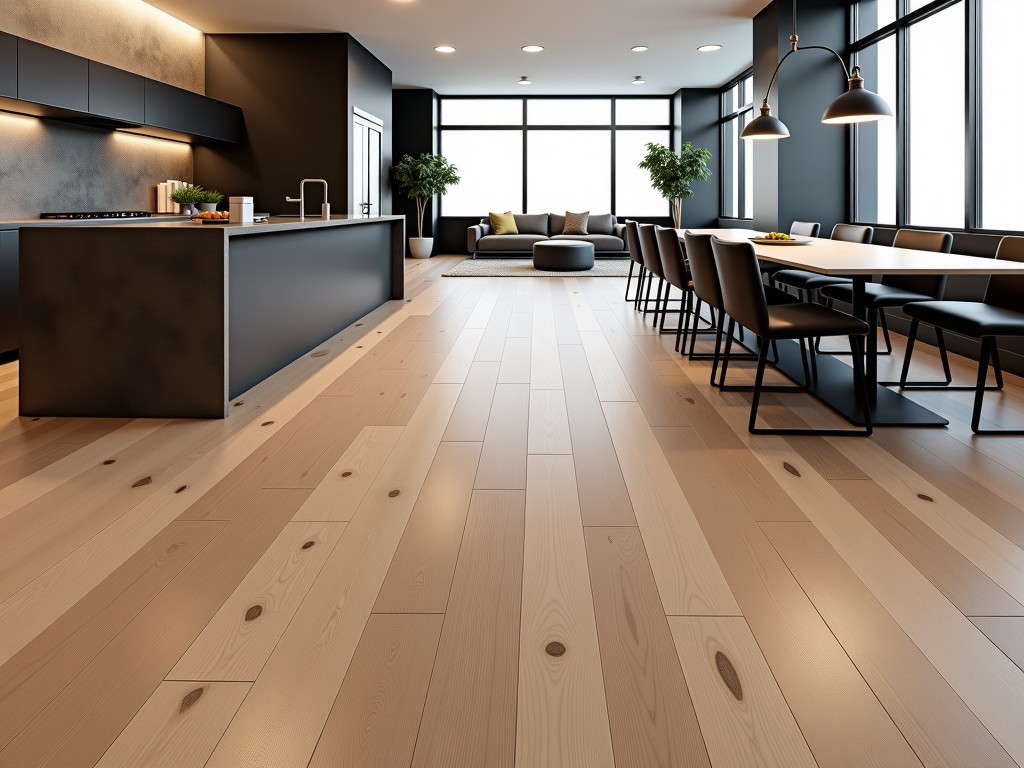
Specialty commercial flooring refers to engineered surface systems designed for high-traffic environments where durability, safety, and maintenance efficiency are critical. These products combine wear-resistant layers with functional backing to meet specific performance demands such as slip resistance, load bearing, and acoustic control.
The core structure typically consists of a polymer base—such as polyvinyl chloride (PVC), polyurethane, or vulcanized rubber—reinforced with fillers like calcium carbonate or glass fiber. A wear layer, often a transparent polyurethane coating, is applied to achieve abrasion resistance values ranging from 0.5 to 2.0 mg loss per 1000 cycles in Taber testing. Backing layers may incorporate recycled content up to 30% by weight while maintaining dimensional stability under temperature variations of -20°C to +60°C. Overall thickness can be customized from 2 mm to 6 mm depending on load requirements.
Performance is quantified through standardized tests that predict long-term behavior under real-world conditions. Key indicators include abrasion resistance, slip resistance, indentation resistance, and chemical exposure tolerance.
| Property | Test Method | Typical Value | Units |
|---|---|---|---|
| Abrasion resistance | Taber ASTM D4060 | 0.5–2.0 | mg loss/1000 cycles |
| Slip resistance | EN 13893 (R rating) | R9–R11 | — |
| Indentation resistance | ASTM F970 (static load) | <0.1 mm | mm |
| Chemical resistance | ISO 26987 | No visible change after 24h exposure | — |
| Impact resistance | ASTM D5420 | >15 J | J |
| Acoustic reduction | ISO 10140‑3 | 10–15 dB | dB |
Installation methods vary according to substrate condition and project schedule. Options include loose‑lay over existing flooring, full‑spread adhesive bonding, and interlocking edge systems that allow rapid reconfiguration. Each method is selected based on load dynamics, moisture barrier requirements, and expected service life.
Beyond performance, visual and geometric attributes can be tailored to project specifications. Color palettes are achievable through pigment integration, allowing RAL or NCS matches within ±2 Delta E tolerance. Geometric options include plank widths from 100 mm to 300 mm, tile sizes up to 600×600 mm, and edge treatments such as beveled, square, or recessed profiles.
Quality control begins with raw‑material lot testing for melt flow index, filler content, and volatile organic compound levels. In‑line monitoring tracks thickness variation within ±0.1 mm and wear‑layer uniformity across each production batch. Finished products undergo random sampling for abrasion, slip, and indentation tests, with results retained for traceability.
Environmental considerations are addressed through recycled‑content formulations and low‑VOC manufacturing processes. Many configurations achieve FloorScore or Greenguard certification, contributing to LEED credit eligibility for indoor air quality.
For project‑specific technical data, sample requests, or quotation details, contact our engineering team. Provide substrate conditions, expected load ratings, and design preferences to receive a tailored recommendation within two business days.
Request a quotationNational patents
Vinyl flooring line
K+ SQ.M capacity
Founded