46
National patents
Luxury vinyl plank (LVP) flooring combines a rigid polymer core with a photographic wear layer that replicates wood, stone, or other surfaces. The product described here features an increased overall
Order this product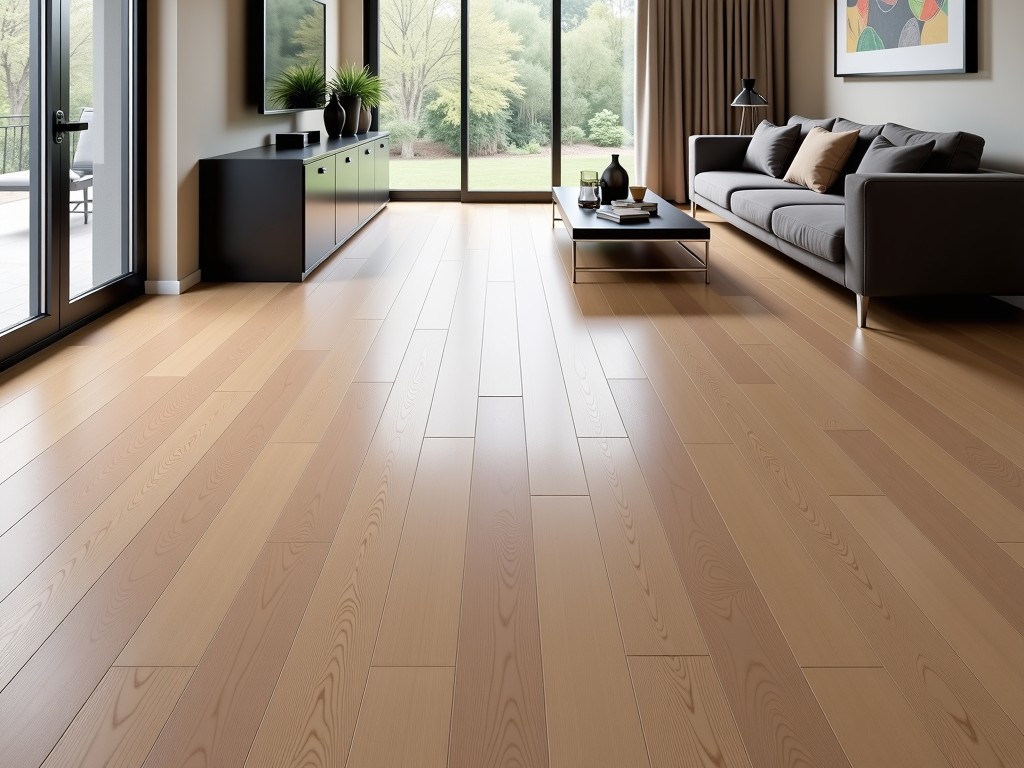
Luxury vinyl plank (LVP) flooring combines a rigid polymer core with a photographic wear layer that replicates wood, stone, or other surfaces. The product described here features an increased overall thickness to enhance impact resistance and acoustic performance while maintaining a competitive price point for large‑scale procurement.
| Property | Typical Value |
|---|---|
| Overall Thickness | 8 mm – 12 mm (customizable) |
| Wear Layer Thickness | 0.5 mm – 0.7 mm (transparent PVC) |
| Core Composition | Stone Plastic Composite (SPC) or rigid PVC |
| Plank Length | 1200 mm – 1800 mm (standard) |
| Plank Width | 150 mm – 250 mm (standard) |
| Locking System | Uniclic click‑lock (no adhesive) |
| Surface Finish | Embossed in register (EIR) or smooth matte |
| Fire Rating | ASTM E648 Class 1 (available upon request) |
| Slip Resistance | R10 (DIN 51130) for textured finishes |
The wear layer is a clear polyvinyl chloride film fortified with aluminum oxide particles, providing abrasion resistance measured in Taber cycles (typically > 10 000 cycles for 0.5 mm layer). The core layer blends limestone powder with PVC and stabilizers, delivering dimensional stability under temperature fluctuations (± 0.2 % linear expansion). A backing layer of PVC or IXPE foam adds underfoot comfort and reduces sound transmission by up to 19 dB in laboratory tests.
The click‑lock mechanism allows floating installation over clean, level subfloors such as concrete, plywood, or existing vinyl. No adhesives are required, which reduces volatile organic compound (VOC) emissions during installation. Expansion gaps of 5 mm around perimeter walls accommodate thermal movement; transition strips are recommended at doorways and between rooms with differing environmental conditions.
In industrial settings, the flooring resists oil, chemicals, and heavy rolling loads due to its dense core and protective wear layer. Retail environments benefit from the realistic visual appearance and low maintenance, while healthcare facilities appreciate the seamless, non‑porous surface that supports infection control protocols. The product’s acoustic attenuation makes it suitable for multi‑story office buildings where footfall noise control is a design criterion.
Each production lot undergoes inline thickness gauging, wear layer adhesion testing (ASTM D4541), and dimensional stability checks after exposure to 80 °C/80 % RH for 24 hours. Finished planks are inspected for color deviation using a spectrophotometer (ΔE < 2.0) and for locking engagement force to ensure consistent click‑lock performance across batches.
Customers may specify overall thickness, wear layer thickness, plank dimensions, and surface texture. Color matching to corporate branding or architectural palettes is achievable through digital printing cores. Embossing patterns can be altered to emulate specific wood grain or stone finishes, and edge treatments (square, beveled, or micro‑bevel) are available upon request.
Yes. Plank length and width can be adjusted within manufacturing tolerances to reduce waste and accommodate unique layout requirements.
Project square footage, desired thickness, wear layer preference, color or finish reference, and any special certifications (e.g., Fire Rating, Slip Resistance) help generate an accurate quote.
Every pallet undergoes random sampling for thickness, wear layer adhesion, locking strength, and visual inspection. A test report is available upon request.
Planks are stacked in corrugated cardboard boxes with edge protectors, then placed on pallets and stretch‑wrapped. Moisture‑barrier sheets are included for overseas shipments.
National patents
Vinyl flooring line
K+ SQ.M capacity
Founded