46
National patents
This product consists of multiple bonded layers engineered for indoor floor applications where moisture exposure, foot traffic, and aesthetic consistency are design considerations. A typical plank
Order this product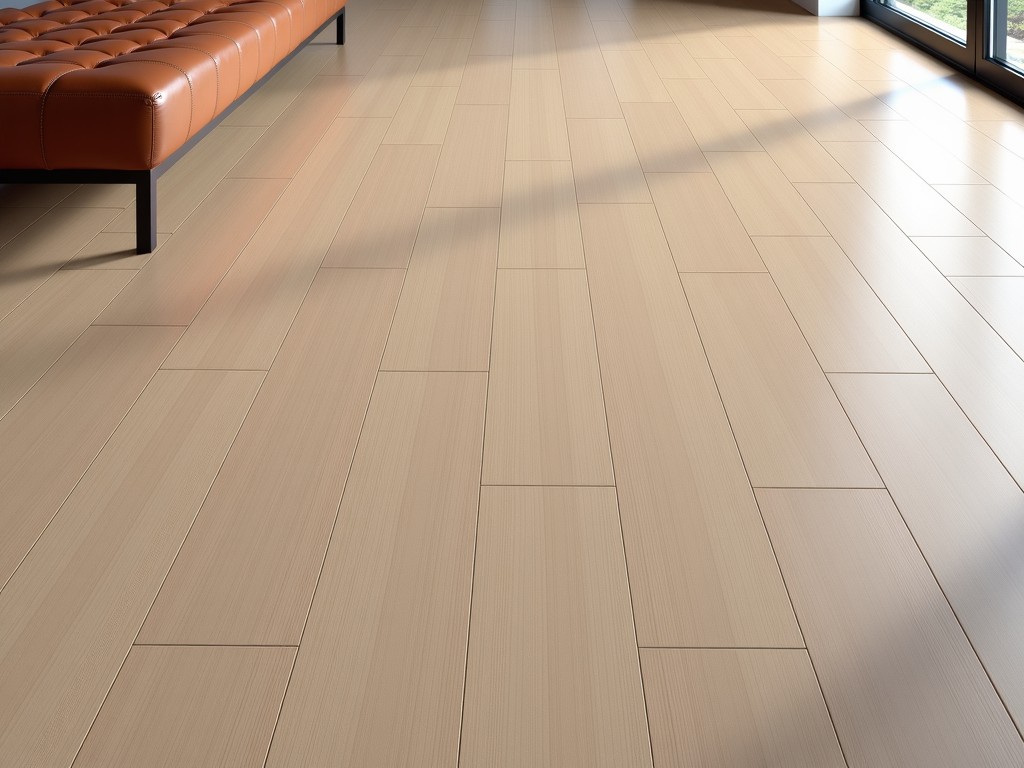
This product consists of multiple bonded layers engineered for indoor floor applications where moisture exposure, foot traffic, and aesthetic consistency are design considerations.
A typical plank includes a transparent wear layer of PVC, a printed decorative film, a rigid core composed of stone‑plastic composite (SPC) or wood‑plastic composite (WPC), and a backing layer that provides dimensional stability and sound attenuation.
| Property | Typical Value | Unit | Notes |
|---|---|---|---|
| Overall thickness | 4.0 – 6.5 | mm | Varies with core type |
| Wear layer thickness | 0.3 – 0.7 | mm | Determines abrasion resistance |
| Plank width | 100 – 228 | mm | Customizable per project |
| Plank length | 900 – 1800 | mm | Typical lengths available |
| Static load limit | ≥ 2500 | psi | Measured per ASTM F970 |
Slip resistance is expressed as a dynamic coefficient of friction (DCOF) value typically ranging from 0.45 to 0.60 depending on surface embossing, meeting common residential safety thresholds.
Dimensional stability after exposure to 80 °C/90 % RH for 6 hours shows length change less than 0.15 %, indicating low tendency to gap or peak under temperature fluctuations.
Volatile organic compound (VOC) emissions are tested according to ISO 16000‑9 and generally fall below 0.05 mg/m³, contributing to indoor air quality compliance.
Most residential planks utilize a uniclic or fold‑down locking mechanism that allows floating installation without adhesive, reducing labor time and enabling easy replacement of individual units.
For areas requiring permanent fixation, a glue‑down variant with a pressure‑sensitive adhesive backing is available, providing enhanced resistance to vertical movement in high‑load zones.
The product’s moisture‑impermeable core prevents swelling when installed below grade or in basements, making it suitable for spaces where traditional wood flooring would risk cupping.
Because the wear layer resists staining from common household spills, the flooring maintains visual consistency in kitchens, dining areas, and multi‑purpose rooms without requiring periodic refinishing.
Each production line incorporates inline thickness gauges that reject boards deviating beyond ±0.1 mm from target, ensuring tight tolerances across batches.
Surface inspection uses 45° lighting to detect printing defects, embossing inconsistencies, or foreign inclusions, with acceptance criteria based on ISO 9001 visual standards.
Finished planks undergo a 24‑hour conditioning cycle at 23 °C/50 % RH before packaging to stabilize dimensions and minimize post‑installation movement.
Planks are stacked in layers separated by polyethylene sheets, then placed on corrugated pallets sized 1100 mm × 1100 mm with a maximum load of 800 kg per pallet.
Edge protection is provided by cardboard corners and stretch‑film wrapping, reducing corner impact during containerized shipment.
To request a detailed specification sheet, discuss customization possibilities, or arrange a sample shipment, please contact our technical team via the link below.
National patents
Vinyl flooring line
K+ SQ.M capacity
Founded