46
National patents
SPC hybrid waterproof flooring integrates a stone‑plastic composite core with a wear‑resistant surface layer and a stabilizing backing. This structure delivers dimensional stability under temperature
Order this product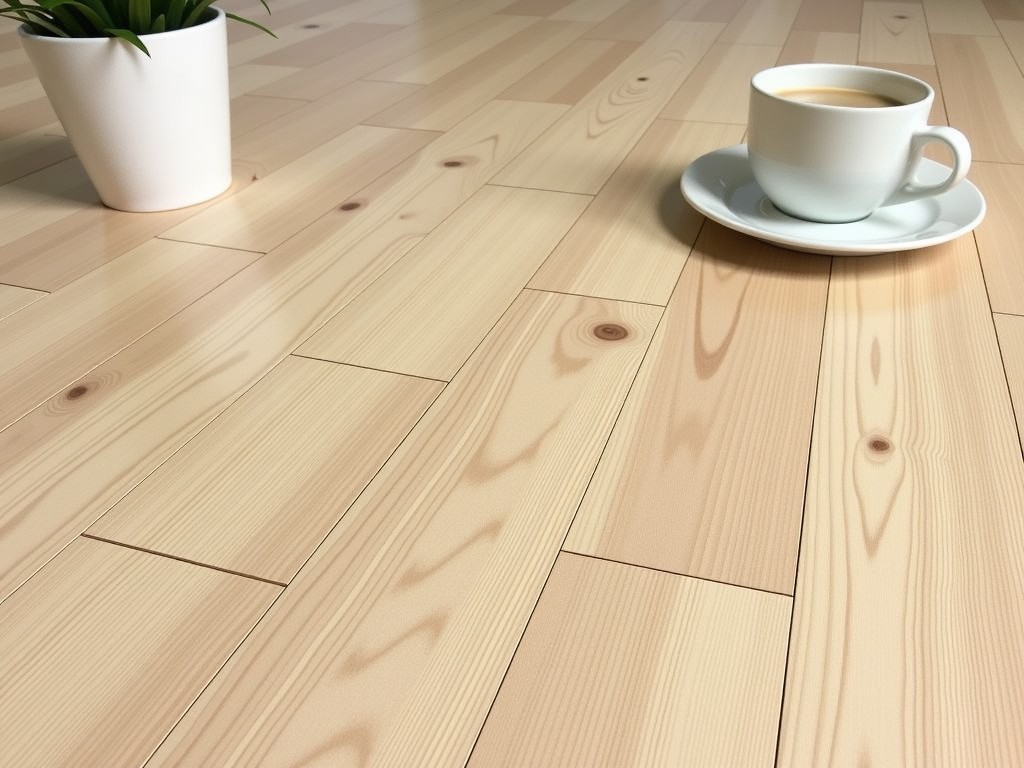
SPC hybrid waterproof flooring integrates a stone‑plastic composite core with a wear‑resistant surface layer and a stabilizing backing. This structure delivers dimensional stability under temperature fluctuations and resistance to liquid ingress, making it suitable for environments where moisture exposure is a concern.
The core layer is formulated from calcium carbonate (typically 60‑70% by weight), polyvinyl chloride resin, and a stabilizer package. This mixture is extruded to achieve a specific gravity between 1.8 and 2.0 g/cm³, providing rigidity while limiting weight.
A wear layer of UV‑cured polyurethane or acrylic coating is applied on the top surface, with thickness commonly ranging from 0.4 mm to 0.6 mm. The backing layer consists of a polyvinyl chloride‑based sheet that balances the board and reduces curling.
| Property | Typical Value | Unit | Test Method (reference) |
|---|---|---|---|
| Total Thickness | 5.0 – 6.0 | mm | ISO 24346 |
| Wear Layer Thickness | 0.4 – 0.6 | mm | EN 429 |
| Density (Core) | 1.8 – 2.0 | g/cm³ | ASTM D792 |
| Dimensional Stability (after 24 h water immersion) | ≤ 0.15 | % | ISO 23999 |
| Residual Indentation (after 150 kg load) | ≤ 0.05 | mm | EN 433 |
| Fire Rating (Euroclass) | Bfl‑s1 | – | EN 13501‑1 |
The stone‑plastic core exhibits low thermal expansion, typically below 30 × 10⁻⁶ /°C, which reduces joint opening in heated environments. The wear layer provides abrasion resistance measured by Taber test values under 100 mg loss after 1000 cycles at 500 g load.
Water absorption after 24 h immersion is generally less than 0.05 % by weight, indicating effective barrier properties against spills and humidity. The product also demonstrates a static coefficient of friction above 0.5 (dry) and 0.4 (wet), meeting slip‑resistance guidelines for commercial walkways.
Raw materials are weighed, blended in a high‑speed mixer, and fed into a twin‑screw extruder where temperature profiles range from 150 °C to 180 °C. The extruded sheet is calibrated to thickness, then passed through a embossing station to impart surface texture before cooling.
After cooling, the sheet undergoes UV coating application for the wear layer, followed by a second pass to apply the backing layer. Final cutting to length and width is performed with precision saws, and edges are optionally beveled or left square based on customer specification.
Each production lot is sampled for density, thickness, and wear‑layer adhesion using peel‑test methods. Dimensional stability is verified by conditioning samples at 23 °C/50 % RH for 48 h, then measuring length change after water immersion.
Surface abrasion resistance is checked with Taber abraser, and results are compared against internal thresholds. Visual inspection for embossing uniformity and color consistency is performed under standardized lighting (D65, 2° observer).
Boards are stacked in cartons with interleaving polyethylene sheets to prevent surface abrasion. Carton dimensions are optimized for palletization, typically holding 1.5 m² to 2.0 m² of product per box, depending on thickness.
Pallets are stretch‑wrapped and corner‑protected for container shipping. Moisture‑barrier liners can be added upon request for routes with high humidity exposure.
Yes. Length and width can be adjusted within standard extrusion limits, typically ranging from 100 mm to 200 mm for width and up to 1800 mm for length, subject to tooling availability.
Required details include intended wear‑layer thickness, total thickness, surface emboss pattern, edge treatment, order quantity, and delivery destination. Any special performance criteria such as fire rating or acoustic values should also be specified.
In‑process checks monitor melt temperature, thickness, and coating cure. Final product testing includes density, dimensional stability, wear‑layer adhesion, abrasion resistance, and visual appearance per internal standards and client specifications.
Standard packaging uses cardboard cartons with polyethylene interleaving. Options include palletizing with corner boards, stretch film, and moisture‑barrier liners for export containers.
Lead time varies with order size and customization level, generally falling between 15 and 30 working days after receipt of confirmed technical drawings and deposit.
To discuss technical requirements, request samples, or obtain a detailed quotation, please reach out via the contact form below.
Send InquiryNational patents
Vinyl flooring line
K+ SQ.M capacity
Founded