46
National patents
This flooring consists of a heterogeneous wear layer fused to a closed‑cell foam cushion, producing a sheet product that can be cut to any length and width required by the project. The heterogeneous
Order this product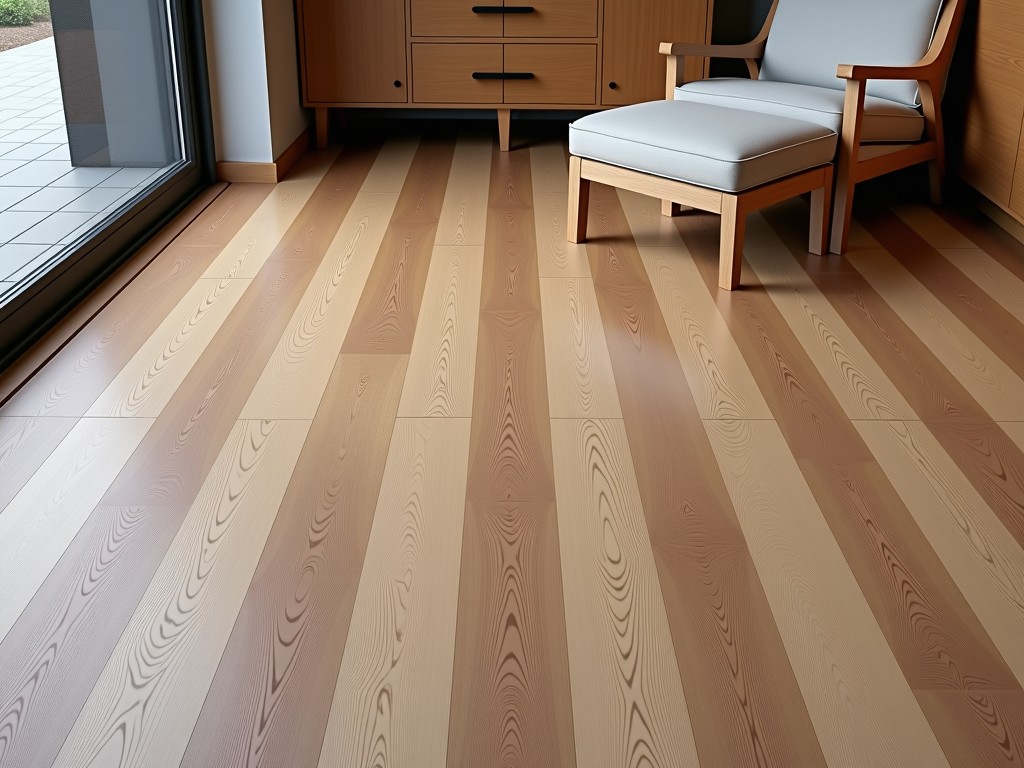
This flooring consists of a heterogeneous wear layer fused to a closed‑cell foam cushion, producing a sheet product that can be cut to any length and width required by the project. The heterogeneous construction allows the visual layer to incorporate multiple colors, patterns, or textures while the cushion layer provides under‑foot comfort and acoustic damping. Suppliers typically offer the material in rolls ranging from 2 m to 4 m wide, with thicknesses that can be adjusted between 2.0 mm and 5.0 mm depending on the intended use.
The wear layer is a polyvinyl chloride (PVC) matrix containing pigments, stabilizers, and performance additives that determine abrasion resistance and UV stability. Beneath it, a heterogeneous print film carries the decorative design, which can be customized to match corporate branding or specific aesthetic requirements. The core cushion layer is manufactured from expanded PVC or polyurethane foam, engineered to achieve a specific compression set and rebound characteristics.
Performance data are derived from standardized tests such as ISO 10582 for wear resistance and ASTM F970 for static load indentation. The cushion layer contributes to impact sound reduction, typically lowering transmitted noise by 4 dB to 8 dB compared with homogeneous vinyl of the same thickness. Slip resistance can be tuned through surface embossing or the addition of anti‑slip agents, achieving R‑values from R9 to R11 depending on the finish.
| Property | Typical Value | Test Standard |
|---|---|---|
| Abrasion resistance (weight loss) | ≤0.08 g/1000 cycles | ISO 10582 |
| Static load indentation (0.5 mm) | ≤0.10 mm | ASTM F970 |
| Impact sound reduction | 4 dB – 8 dB | ISO 10140‑3 |
| Slip resistance (R‑value) | R9 – R11 | DIN 51130 |
| Dimensional stability (heat) | ≤0.25 % change | ISO 23999 |
In healthcare facilities, the cushion layer reduces fatigue for staff who stand for extended periods, while the heterogeneous wear layer allows for seamless integration of way‑finding graphics or antimicrobial additives. Educational environments benefit from the acoustic dampening, which lowers reverberation in classrooms and corridors, improving speech intelligibility. Retail spaces often select this product because the wear layer can withstand rolling loads from carts and pallet jacks, and the surface can be printed with promotional patterns that are replaced during seasonal updates without replacing the entire floor.
Customers can specify the overall thickness, wear layer thickness, cushion density, and surface finish to match performance targets. The print film supports high‑resolution digital printing, enabling corporate logos, custom patterns, or photographic images to be embedded directly into the wear layer. Edge profiles can be supplied as straight cut, beveled, or with a pre‑applied adhesive strip for rapid installation.
| Parameter | Range / Options | Notes |
|---|---|---|
| Overall thickness | 2.0 mm – 5.0 mm | Selected based on load and comfort requirements |
| Wear layer thickness | 0.3 mm – 0.7 mm | Thicker wear layer increases abrasion life |
| Cushion density | 30 kg/m³ – 60 kg/m³ | Higher density improves load bearing, lower density increases softness |
| Surface finish | Smooth, embossed, textured, anti‑slip coating | Affects slip resistance and visual appearance |
| Width of roll | 2 m, 2.5 m, 3 m, 4 m | Custom widths available upon request |
| Length per roll | Up to 30 m (standard), longer lengths negotiable | Limited by handling equipment |
Each batch undergoes incoming material verification for PVC resin melt flow index and plasticizer content, followed by in‑line monitoring of layer thickness using laser gauges. Finished sheets are sampled for abrasion resistance, indentation, and dimensional stability according to ISO 10582 and ASTM F970. Visual inspection confirms print registration and color consistency under standardized lighting (D50). Suppliers typically provide a test certificate with each shipment that reports the average and range of key performance indicators.
Rolls are wrapped in a protective polyethylene film, then placed on a sturdy cardboard core and secured with polyester strapping. For overseas shipments, the packaged rolls are loaded into ISO containers with moisture‑absorbent desiccants and protected against temperature extremes using thermal blankets. Palletized configurations are available for truckload deliveries, with each pallet not exceeding 1 tonne to facilitate safe handling with forklifts.
Yes. Width, length, overall thickness, and wear layer thickness can be tailored to project specifications. Custom widths beyond the standard 2 m‑4 m range are available upon request and may affect lead time.
To generate an accurate quote we need the intended application, expected traffic load, required thickness, wear layer performance level, any specific visual design or branding elements, delivery destination, and required delivery date.
Quality control includes raw material verification, in‑line thickness monitoring, post‑production abrasion and indentation testing, and visual inspection for print fidelity and color consistency. A test report accompanies each shipment.
Standard packaging uses polyethylene film wrap and a cardboard core with polyester strapping. For export, additional moisture barriers, desiccants, and thermal blankets are used. Palletized options are offered for domestic freight.
National patents
Vinyl flooring line
K+ SQ.M capacity
Founded