46
National patents
Glue down vinyl tile flooring consists of a wear layer, a printed design layer, a core layer, and a backing layer. The product is supplied in individual tiles that are adhered to a prepared substrate
Order this product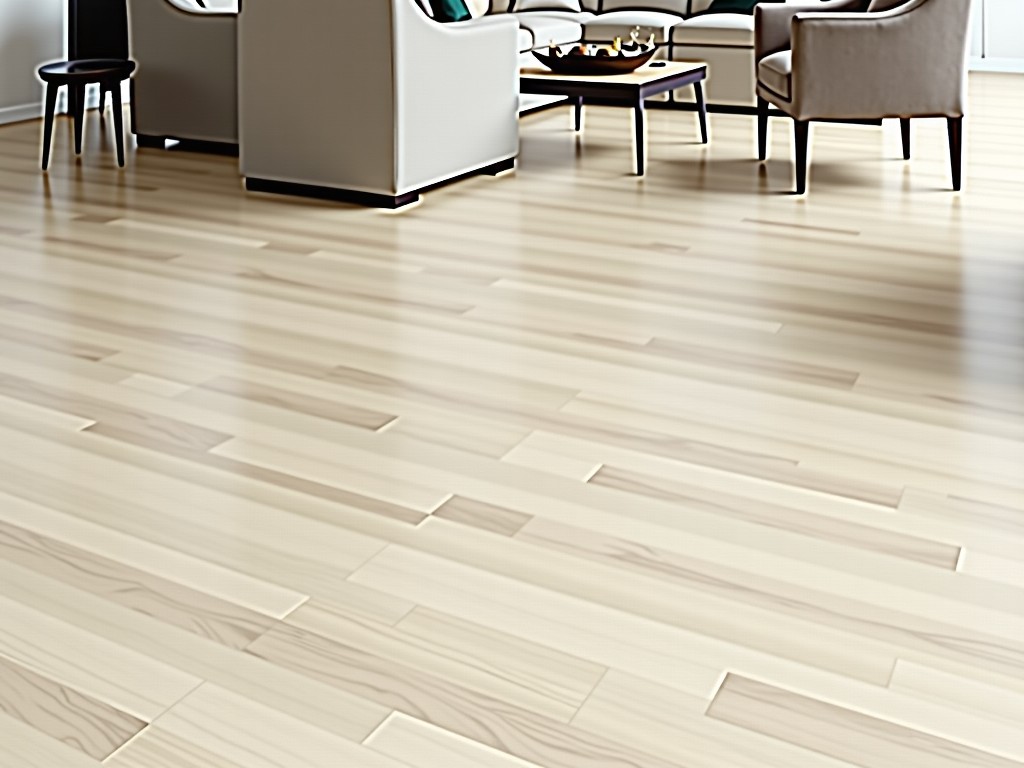
Glue down vinyl tile flooring consists of a wear layer, a printed design layer, a core layer, and a backing layer. The product is supplied in individual tiles that are adhered to a prepared substrate using a pressure‑sensitive adhesive.
Tile dimensions typically range from 300 mm × 300 mm to 600 mm × 600 mm, with thicknesses between 2.0 mm and 5.0 mm depending on the intended traffic level. The wear layer thickness, measured in mils, directly influences abrasion resistance and is customizable from 0.2 mm to 0.7 mm.
The following table lists typical performance ranges that can be adjusted according to project requirements. Exact values are confirmed during sample approval.
| Property | Typical Range | Test Method (reference) |
|---|---|---|
| Overall Thickness | 2.0 mm – 5.0 mm | ISO 24346 |
| Wear Layer Thickness | 0.2 mm – 0.7 mm | ASTM F410 |
| Dimensional Stability (heat) | ≤0.15 % change | ASTM F2199 |
| Residual Indentation | ≤0.10 mm | ASTM F1914 |
| Slip Resistance (R value) | R9 – R11 (depending on surface texture) | DIN 51130 |
All values are typical; custom specifications can be negotiated based on the end‑use environment, expected load, and maintenance regime.
Glue down vinyl tile is selected when a durable, low‑maintenance surface is required over concrete, wood, or existing flooring substrates. Its thin profile allows installation without significant floor height increase, which is important in retrofit projects where door clearances are limited.
Each application benefits from the product’s dimensional stability and the ability to tailor the wear layer to the anticipated abrasion level.
Manufacturing is performed in rolls that are slit to tile size, allowing a wide range of dimensions, thicknesses, and surface finishes. The core formulation can be adjusted for flexibility or rigidity depending on the subfloor condition.
All customizations are subject to tooling lead times; samples are produced to confirm dimensional and visual specifications before full production.
Each production lot undergoes inline thickness gauging and wear layer measurement using laser micrometers. Statistical process control charts monitor key dimensions, with alerts triggered when values exceed ±2 % of target.
Finished tiles are inspected for surface defects under 500 lux lighting, and a random sample is subjected to abrasion testing (Taber) to verify wear layer performance. Adhesive compatibility is checked by bonding a subset of tiles to a standard substrate and measuring peel strength after 24 h cure.
Documentation includes a material test report (MTR) per batch, which is available to customers upon request.
Tiles are packed in corrugated cartons with interleaving polyethylene sheets to prevent surface scratching. Carton dimensions are optimized for palletization, typically holding 20 kg of product per box.
For export shipments, cartons are placed in ISO‑rated containers with moisture‑absorbing desiccants to mitigate humidity‑related dimensional change during transit.
Standard inventory items (stock sizes and wear layers) have a lead time of 5‑7 working days after order confirmation. Custom sizes or special surface treatments require tooling and typically extend lead time to 15‑20 working days.
Samples are produced on the same equipment as production runs. A sample kit includes three tiles of the requested specification, a small adhesive sample, and a data sheet. Shipping of samples is usually via express courier and arrives within 3‑5 business days.
Yes. Tile length and width can be specified in 1 mm increments within the equipment limits of 100 mm to 1000 mm. Minimum order quantities apply for non‑standard sizes.
To generate a quote we need the desired tile size, overall thickness, wear layer thickness, surface texture or print file, quantity, and delivery destination. Subfloor condition and adhesive preference are also helpful.
Every lot undergoes dimensional checks, wear layer verification, visual inspection under defined lighting, and mechanical testing (abrasion, indentation, slip resistance) on a statistically significant sample.
Standard packaging is corrugated cartons with polyethylene interleaving. Options include palletized cartons with corner boards, stretch film, or custom crating for heavy‑duty industrial orders.
For technical assistance, sample requests, or a formal quotation, please contact our engineering team.
Contact UsNational patents
Vinyl flooring line
K+ SQ.M capacity
Founded