46
National patents
Heterogeneous vinyl flooring consists of multiple bonded layers, each serving a distinct functional purpose. The top wear layer provides abrasion resistance, while a printed design layer delivers
Order this product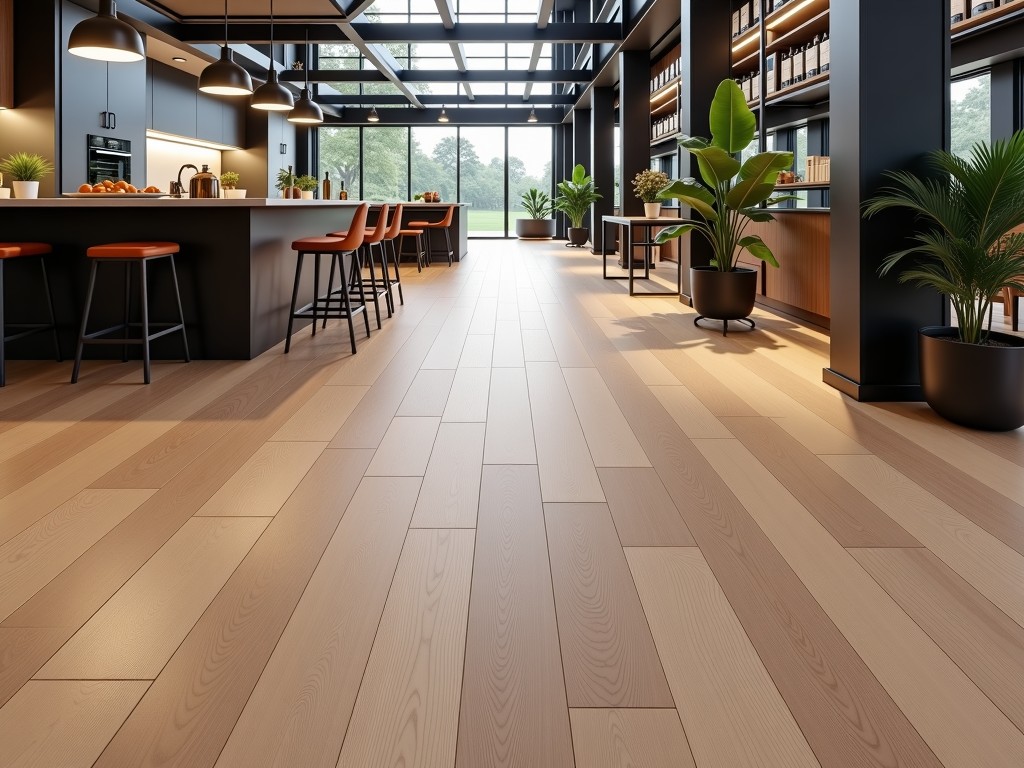
Heterogeneous vinyl flooring consists of multiple bonded layers, each serving a distinct functional purpose. The top wear layer provides abrasion resistance, while a printed design layer delivers visual appearance, and a backing layer contributes dimensional stability and underfoot comfort.
Typical constructions include a PVC‑based wear layer ranging from 0.3 mm to 0.7 mm thickness, a high‑definition printed film, a filled PVC core for rigidity, and a backing layer that may incorporate foam or fiberglass reinforcement. The layers are fused under heat and pressure to eliminate delamination risks.
Additives such as plasticizers, stabilizers, and pigments are selected to meet specific performance criteria, including low VOC emission and resistance to staining agents commonly found in industrial environments.
| Property | Typical Value |
|---|---|
| Overall thickness | 2.0 mm – 3.5 mm |
| Wear layer thickness | 0.3 mm – 0.7 mm |
| Dimensional stability (ISO 23999) | ≤0.25 % after heat exposure |
| Slip resistance (R‑value) | R9 – R11 depending on surface texture |
| Fire classification (EN 13501‑1) | Bfl‑s1 (commonly available) |
| Chemical resistance (ISO 26987) | Resistant to diluted acids, alkalis, and oils |
In healthcare facilities, the flooring’s seamless surface and chemical resistance support strict hygiene protocols while reducing slip hazards in wet zones. Educational institutions benefit from its durability under high foot traffic and the ability to incorporate wayfinding graphics directly into the wear layer.
Retail environments utilize the product’s aesthetic flexibility to match branding, whereas industrial settings such as warehouses and laboratories rely on its load‑bearing core and resistance to spills. The modular roll format allows rapid installation over large areas with minimal downtime.
Each production batch undergoes inline thickness monitoring using laser gauges, ensuring tolerances stay within ±0.05 mm. Adhesion between the wear layer and printed film is evaluated by peel‑strength testing according to ASTM D903, targeting values above 1.5 N/mm.
Dimensional stability is assessed after exposure to 80 °C for six hours, with acceptable change limited to 0.25 %. Slip resistance is measured using the pendulum tester, and results are correlated to the specified R‑value range. Final inspection includes visual defect checks under standardized lighting to detect color variation or surface imperfections.
Rolls are wound on rigid cardboard cores with internal diameters of 76 mm or 102 mm, depending on weight. A protective polyethylene film shields the surface during transit, and edge protectors prevent mechanical damage. Standard pallet configuration holds up to 12 rolls, secured with stretch wrap and corner braces for safe handling.
For export shipments, moisture‑barrier bags and ISPM‑15 compliant wooden pallets are available upon request. Documentation includes material safety data sheets, test certificates, and installation guidelines customized to the project specifications.
For technical consultation or a formal quotation, provide your project details using the contact form below. Our engineering team will respond with material recommendations, lead‑time estimates, and pricing tailored to your specifications.
Submit InquiryNational patents
Vinyl flooring line
K+ SQ.M capacity
Founded