46
National patents
Loose lay vinyl tile flooring is installed without adhesive or mechanical fasteners, relying on its weight, friction, and interlocking edge design to remain stable under foot traffic. This method
Order this product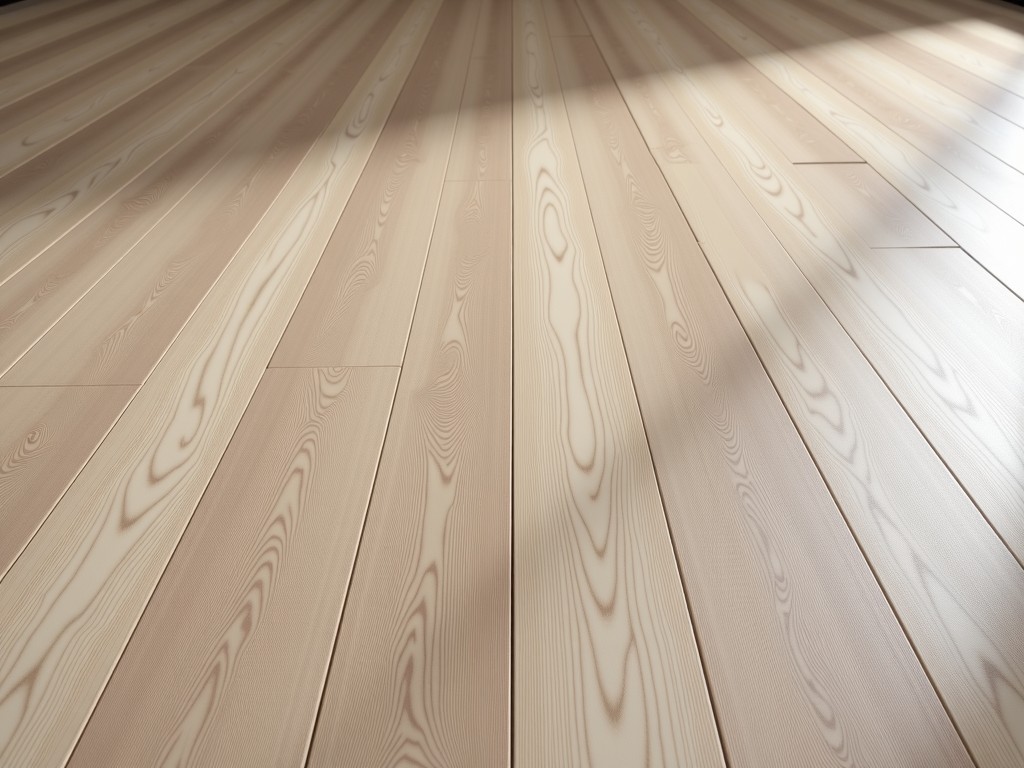
Loose lay vinyl tile flooring is installed without adhesive or mechanical fasteners, relying on its weight, friction, and interlocking edge design to remain stable under foot traffic. This method reduces installation time, allows for easy replacement of individual tiles, and minimizes substrate preparation requirements.
Each tile consists of four primary layers: a transparent wear layer of PVC‑based resin, a high‑definition printed film that replicates stone, wood, or abstract patterns, a compact PVC core containing plasticizers and stabilizers for flexibility, and a backing layer that provides dimensional stability and reduces sound transmission. The wear layer thickness typically ranges from 0.3 mm to 0.7 mm, directly influencing abrasion resistance.
| Property | Typical Range | Test Standard (reference) |
|---|---|---|
| Total thickness | 2.0 mm – 5.0 mm | ISO 10582 |
| Wear layer thickness | 0.3 mm – 0.7 mm | EN 660‑2 |
| Weight per tile (300 mm × 300 mm) | 1.8 kg – 4.5 kg | ASTM F1700 |
| Dimensional change after heat exposure | ≤0.2 % (length/width) | ISO 23999 |
| Static load resistance | ≥150 N/mm² (depending on thickness) | ASTM F970 |
Slip resistance is measured by the pendulum test; typical values achieve a Pendulum Test Value (PTV) of 45–55, corresponding to R10 classification under DIN 51130 for wet environments. Fire performance commonly meets EN 13501‑1 class Bfl‑s1 when the wear layer includes flame‑retardant additives. The product exhibits low volatile organic compound (VOC) emissions, often below 0.5 mg/m³ after 24 hours, complying with CDPH/EHLB/Standard Method V1.1.
Acoustic impact insulation improvement (ΔLw) ranges from 12 dB to 18 dB for a 6 mm thick tile with a foam backing, reducing footfall noise in office and healthcare settings. Thermal conductivity is approximately 0.15 W/(m·K), allowing compatibility with underfloor heating systems up to 27 °C surface temperature.
Tile dimensions can be adjusted from 100 mm × 100 mm up to 1000 mm × 1000 mm, with standard increments of 50 mm. Wear layer thickness is selectable in 0.1 mm steps between 0.3 mm and 0.7 mm to match expected traffic loads. Surface embossing patterns (e.g., stone grain, wood texture, matte) are defined by digital molds, enabling precise reproduction of customer‑provided designs or corporate branding.
Edge profiles include square, beveled, or rounded options, influencing both visual appearance and the ease of tile interlocking. Backing materials range from solid PVC to foam‑enhanced layers for improved acoustic performance, with thickness variations from 0.5 mm to 2.0 mm. Color matching follows Pantone or RAL specifications, and custom printing can incorporate logos, safety markings, or wayfinding graphics directly into the wear layer.
Incoming PVC resin is evaluated for melt flow index, plasticizer content, and heavy‑metal limits before extrusion. During production, inline gauges monitor thickness uniformity across the wear layer, core, and backing, with tolerances held to ±0.05 mm. Each batch undergoes abrasion cycles using a Taber tester (CS‑10 wheels, 500 g load) to verify wear loss does not exceed the specified limit for the chosen wear layer class.
Finished tiles are inspected for dimensional stability after a 24‑hour heat soak at 80 °C, printed fidelity under standardized lighting, and slip resistance via the pendulum method. Documentation includes a test report per EN 13893 slip resistance and a Declaration of Conformity for REACH and VOC compliance, available upon request.
Tiles are stacked in layers separated by low‑density polyethylene sheets to prevent surface abrasion, then placed on pallets sized 1100 mm × 1100 mm with a maximum load of 1.2 t per pallet. A stretch‑film wrap secures the load, and a moisture‑barrier bag lines each pallet to protect against humidity during transit. For container shipments, pallets are arranged to allow forklift access from all sides, reducing handling time at destination.
Yes. Length and width can be specified in 50 mm increments within the 100 mm–1000 mm range, subject to tooling availability.
Project dimensions, desired wear layer thickness, total area, preferred finish (embossing, color), and any special performance criteria (e.g., slip rating, fire class) enable an accurate quote.
Standard PVC backing, foam‑enhanced PVC for acoustic improvement, and recycled‑content PVC blends are offered; specific formulations can be discussed.
Incoming resin checks, in‑line thickness monitoring, abrasion testing, dimensional stability after heat soak, and final slip‑resistance verification constitute the QC protocol.
Polyethylene interlayer sheets, stretch‑film wrapped pallets, moisture‑barrier bags, and custom crate options for air freight.
Pallets are secured with corner boards, strap reinforcement, and sealed with humidity‑indicating cards to detect moisture ingress.
Lead time ranges from 3 weeks for standard configurations to 5‑6 weeks for fully customized orders, depending on tooling and material availability.
Sample kits containing up to six tiles with selected wear layer, embossing, and color can be dispatched via express courier; charges are credited against the first order.
For detailed specifications, sample requests, or project‑specific consultation, please reach out to our technical team. Submit an inquiry to receive a tailored quotation and lead‑time estimate.
National patents
Vinyl flooring line
K+ SQ.M capacity
Founded