46
National patents
Outdoor vinyl sheet flooring is engineered for environments exposed to sunlight, temperature fluctuations, and pedestrian traffic. The base consists of a polyvinyl chloride (PVC) matrix reinforced
Order this product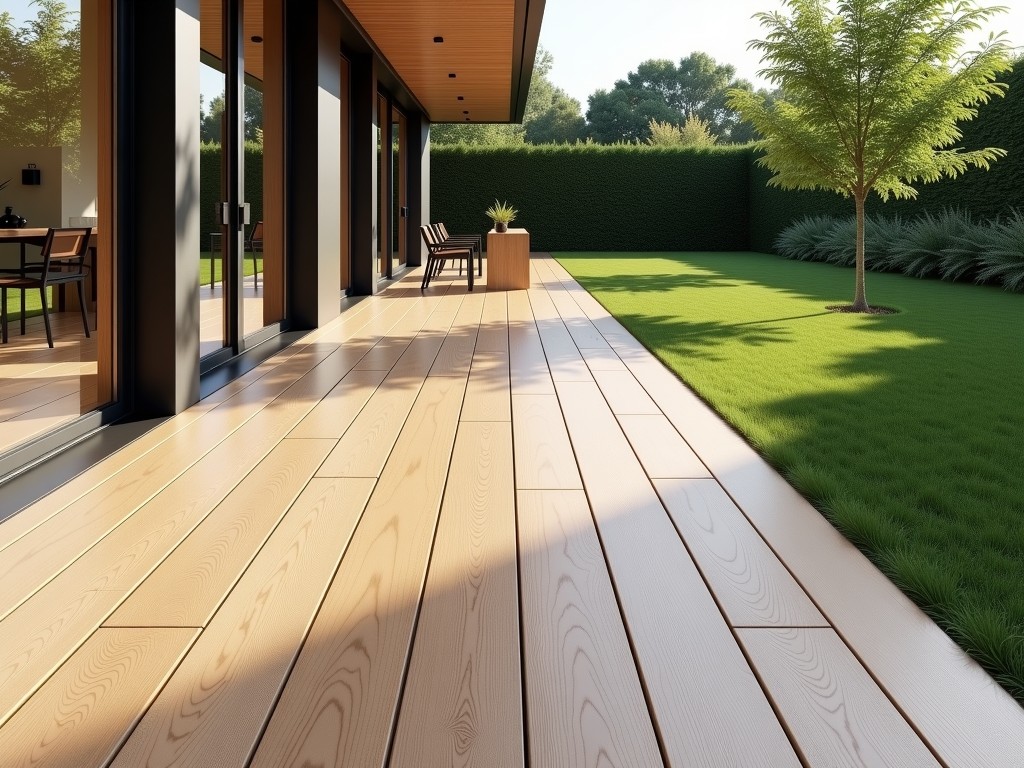
Outdoor vinyl sheet flooring is engineered for environments exposed to sunlight, temperature fluctuations, and pedestrian traffic. The base consists of a polyvinyl chloride (PVC) matrix reinforced with a woven polyester or fiberglass scrim to enhance dimensional stability.
Typical overall thickness ranges from 2.0 mm to 4.0 mm, with a wear layer thickness of 0.3 mm to 0.7 mm depending on the expected service life.
All components are selected to meet outdoor durability criteria; exact formulations are adjustable per project specifications.
Key engineering properties are presented as typical ranges; actual values are confirmed during sample evaluation.
| Property | Typical Range | Test Method (Reference) |
|---|---|---|
| Tensile Strength (MD/CD) | 15–25 MPa | ASTM D638 |
| Elongation at Break | 200–350 % | ASTM D638 |
| Coefficient of Friction (wet) | 0.5–0.7 | ASTM E303 |
| UV Resistance (color change ΔE after 1000 h) | ≤ 4 | ISO 4892-2 |
| Dimensional Change (‑20 °C to +60 °C) | ≤ 0.5 % | ASTM D1204 |
Values above are indicative; final specifications are confirmed via material test reports (MTR) for each production lot.
The factory supports a range of adjustments to align the flooring with site‑specific requirements.
All customizations are subject to minimum order quantities and tooling lead times, which are discussed during quotation.
Production occurs on continuous calendering lines equipped with inline cooling and embossing stations. The reinforcement scrim is laminated during the sheet formation stage to prevent delamination.
Quality checkpoints include:
Finished rolls are inspected for visual defects, dimensional accuracy, and rolled tension before packaging.
Outdoor vinyl sheet flooring is selected where a seamless, low‑maintenance surface is required under exposure to weather.
The product’s closed‑cell structure prevents water absorption, reducing the risk of substrate deterioration in freeze‑thaw cycles.
Each batch undergoes a standardized test regimen prior to release.
| Test | Acceptance Criteria |
|---|---|
| Thickness uniformity | ±0.10 mm across roll width |
| Tensile strength (MD) | ≥ 18 MPa |
| Coefficient of friction (wet) | ≥ 0.55 |
| UV color stability (ΔE after 1500 h) | ≤ 5 |
| Rolling load resistance (10 kPa) | No delamination or cracking |
Test reports are available upon request; third‑party certification can be arranged for specific project standards.
Yes. Overall thickness, wear layer thickness, roll width, and length are adjustable according to project specifications. Minimum order quantities apply for non‑standard sizes.
To provide an accurate quote we need: intended application, required dimensions (thickness, width, length), surface finish (smooth, embossed, printed), color or pigment reference, and any backing or adhesive requirements.
In‑line thickness monitoring, tensile testing of coupons, UV stabilizer concentration analysis, and final visual/ dimensional inspection are performed on each production lot. Test data are supplied with the shipment.
Standard packaging uses polyethylene film wrapped rolls placed on sturdy pallets with corner protection. For export, moisture‑barrier bags and wooden crates can be supplied upon request.
Lead time depends on order complexity and current capacity; standard items usually ship within 3–4 weeks, while customized colors or textures may require 5–6 weeks. Exact timelines are confirmed at order acceptance.
For technical datasheets, sample requests, or to discuss a custom specification, please contact our engineering team.
Submit InquiryNational patents
Vinyl flooring line
K+ SQ.M capacity
Founded