46
National patents
Sheet vinyl roll flooring with a wood‑look surface is produced by laminating a printed decorative film onto a PVC core and applying a protective wear layer. The product is supplied in continuous
Order this product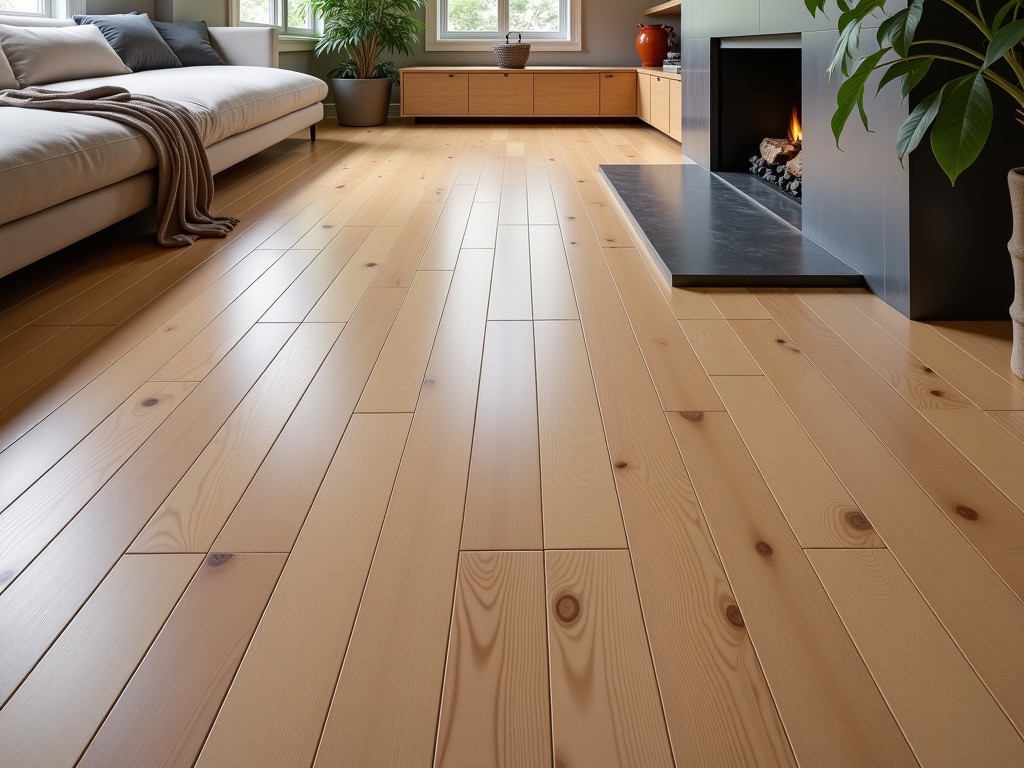
Sheet vinyl roll flooring with a wood‑look surface is produced by laminating a printed decorative film onto a PVC core and applying a protective wear layer. The product is supplied in continuous rolls, allowing seamless installation over large areas such as warehouses, retail corridors, and manufacturing floors.
Key dimensions and material properties can be adjusted to match project specifications. Typical values are shown below; actual numbers are confirmed during quotation.
| Parameter | Typical Range | Customization Notes |
|---|---|---|
| Overall thickness | 1.5 mm – 3.0 mm | Adjustable by changing PVC core thickness |
| Wear layer thickness | 0.2 mm – 0.7 mm | Determines abrasion resistance class |
| Roll width | 1.0 m – 2.0 m | Standard widths 1.2 m, 1.5 m, 2.0 m |
| Roll length | 15 m – 30 m per roll | Custom lengths available on request |
| Weight per roll | 8 kg – 25 kg | Depends on thickness and width |
The production line begins with calendaring PVC resin into a uniform sheet. A high‑resolution decorative film, printed with wood grain patterns, is laminated onto the sheet using heat and pressure. A clear urethane wear layer is then coated and cured. Finally, the product is wound onto cores and cut to the ordered roll length.
In‑line thickness gauges monitor core dimensions, while optical sensors verify print registration. This closed‑loop control keeps thickness variation within ±0.05 mm and ensures consistent embossing depth across the roll.
In distribution centers, the flooring resists fork‑lift tire marks and accommodates frequent cleaning with neutral pH detergents. In showroom environments, the wood appearance provides a warm aesthetic while offering superior slip resistance (R10 rating) compared to bare concrete.
Because the product is supplied in rolls, seams can be minimized using heat‑welding techniques, which is advantageous in food‑processing zones where hygienic joints are required.
Each batch undergoes dimensional inspection, wear‑layer adhesion testing (ASTM D4236), and accelerated abrasion cycles (Taber Abrader, 1000 cycles). Results are recorded and available to customers upon request.
Traceability is maintained by labeling each roll with a unique batch code that links to the raw material certificates and production parameters.
National patents
Vinyl flooring line
K+ SQ.M capacity
Founded