46
National patents
The product consists of a stone‑plastic composite core topped with a transparent wear layer and a printed decorative film. Overall thickness is 5 mm, with a wear layer typically 0.3 mm thick. The
Order this product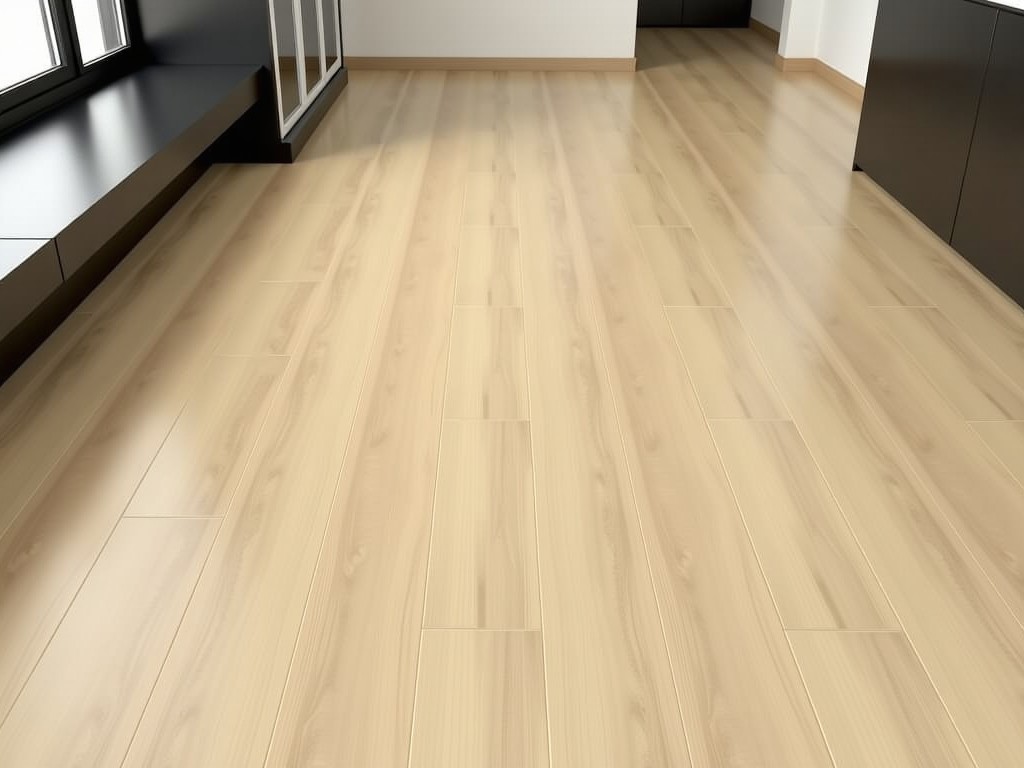
The product consists of a stone‑plastic composite core topped with a transparent wear layer and a printed decorative film. Overall thickness is 5 mm, with a wear layer typically 0.3 mm thick. The core formulation blends calcium carbonate (≈60 % by weight), PVC resin, and stabilizers to achieve a density of about 1.9 g/cm³.
| Property | Typical Value | Test Standard |
|---|---|---|
| Overall thickness | 5.0 mm ±0.1 mm | ISO 24346 |
| Wear layer thickness | 0.30 mm ±0.02 mm | ISO 24340 |
| Density | 1.85‑1.95 g/cm³ | ISO 1183 |
| Dimensional change after heat (70 °C, 6 h) | ≤0.15 % | EN 434 |
| Water absorption (24 h) | ≤0.05 % | ISO 24336 |
| Slip resistance (R value) | R10 (wet) | DIN 51130 |
| Fire classification | Bfl‑s1 | EN 13501‑1 |
| VOC emission (after 28 days) | ≤0.05 mg/m³·h | ISO 16000‑9 |
The SPC core is manufactured by high‑speed extrusion of a dry blend of limestone powder, PVC, and plasticizers. The extruded sheet is cooled, calibrated to 5 mm thickness, and then laminated with a printed film and a wear layer using a hot‑press cycle. The click‑locking profile is milled into the edges after lamination, allowing floating installation without adhesives.
Because the core contains no wood fibers, it exhibits negligible swelling when exposed to moisture, making it suitable for wet environments such as food‑processing washdown areas or locker rooms.
Raw materials are weighed and mixed in a twin‑screw extruder under controlled temperature (≈180 °C) to ensure uniform dispersion of the calcium carbonate. The melt is forced through a die to form a continuous sheet, which is then pulled through a series of cooling rollers to achieve dimensional stability.
After cooling, the sheet passes through a laminating station where the decorative film and wear layer are bonded under heat and pressure (≈150 °C, 2 MPa). The laminated sheet is then cut to length, and the locking profile is milled on a CNC router. Final inspection includes thickness gauging, surface defect scanning, and locking‑fit testing.
The low water absorption (<0.05 %) prevents delamination when the flooring is subjected to frequent wet cleaning or occasional spills. The dimensional stability under heat (≤0.15 % change) ensures that joints remain tight in areas with temperature fluctuations, such as near ovens or refrigeration units.
A wear layer of 0.3 mm provides a abrasion resistance rating suitable for medium‑traffic zones (e.g., corridors, assembly lines) while still allowing recoating if surface renewal is required after several years of service.
Slip resistance rated R10 meets the requirements for areas where water or oil may be present, reducing the likelihood of slip incidents in workshops and maintenance bays.
In automotive parts manufacturing, the flooring resists oil and coolant exposure, and its click‑lock system allows rapid replacement of damaged sections without shutting down the entire line.
For pharmaceutical cleanrooms, the non‑porous surface does not harbor particulates, and the low VOC emission supports compliance with indoor air quality standards.
In retail environments such as showrooms, the product offers a stable substrate for heavy display fixtures while providing a quiet underfoot feel due to the dense core.
Each production lot undergoes inline thickness monitoring with laser gauges, targeting a tolerance of ±0.1 mm. Surface inspection stations use high‑resolution cameras to detect scratches, color variation, or embossing defects above a defined threshold.
Mechanical properties are verified on samples cut from the line: wear layer adhesion is measured by a peel test (≥1.5 N/mm), and impact resistance is evaluated using a falling‑weight apparatus (≤10 mm indentation at 1 J). Results are logged and compared to internal control charts before release.
Thickness can be adjusted between 4 mm and 6 mm by altering the core extrusion rate while keeping the wear layer at 0.3 mm for projects requiring higher load bearing.
Wear layer thickness is offered in 0.2 mm, 0.3 mm, and 0.5 mm variants, allowing customers to match the expected abrasion level of their facility.
Locking profiles are available in standard 5‑mm click, a double‑lock variant for shear‑prone areas, and a glue‑down option for permanent installations.
Surface finishes include matte, low‑gloss, and embossed textures that mimic wood, stone, or concrete patterns; custom embossing logs can be supplied upon request.
Boards are packed in cartons of 2 m², with each carton weighing approximately 18 kg. Cartons are stacked on pallets (max 1.2 m high) and secured with stretch film and corner boards to prevent shifting during transit.
For export shipments, moisture‑barrier liners are inserted inside the cartons, and pallets are treated according to ISPM‑15 standards. Tracking labels include batch numbers, production date, and destination details to facilitate traceability.
For technical data sheets, sample requests, or project‑specific inquiries, please contact our sales engineering team.
Request a QuoteNational patents
Vinyl flooring line
K+ SQ.M capacity
Founded