46
National patents
Vinyl sheet flooring for bathrooms is engineered as a homogeneous or heterogeneous sheet that provides a continuous, water‑resistant surface. The product is supplied in rolls, allowing seamless
Order this product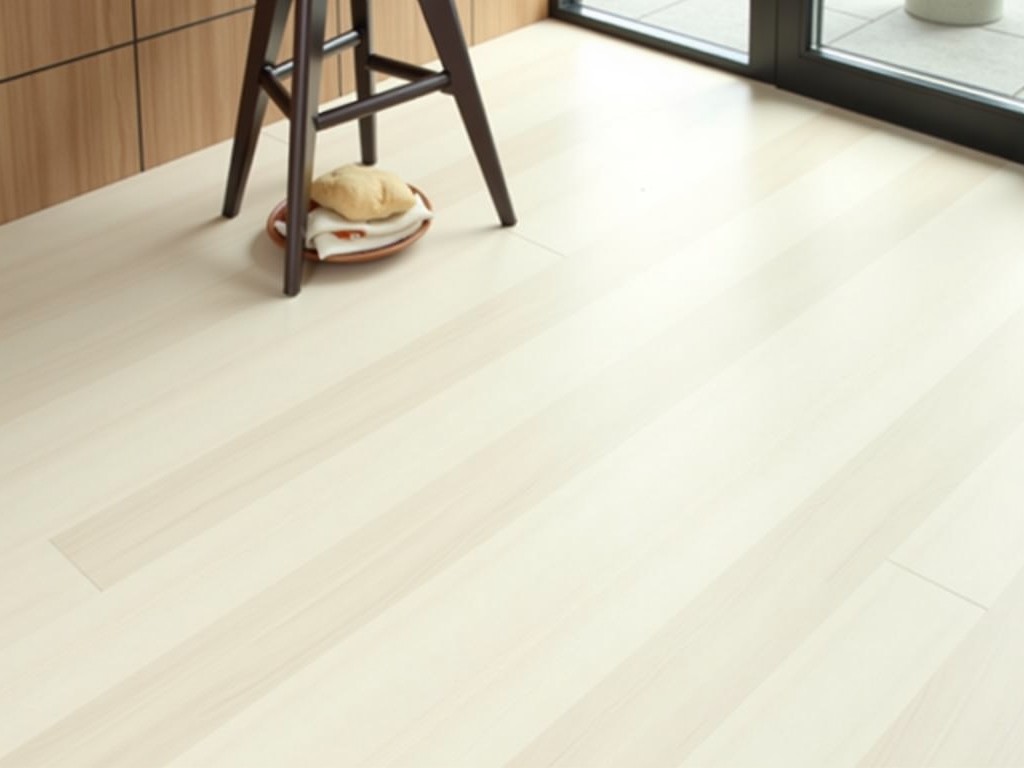
Vinyl sheet flooring for bathrooms is engineered as a homogeneous or heterogeneous sheet that provides a continuous, water‑resistant surface. The product is supplied in rolls, allowing seamless installation over prepared substrates and minimizing joints where moisture could ingress.
A typical construction consists of a clear wear layer, a printed design layer, a foam or felt backing, and a stabilizing base layer. The wear layer is usually polyvinyl chloride (PVC) with added plasticizers and stabilizers, ranging from 0.15 mm to 0.35 mm thickness depending on traffic expectations.
The design layer carries the visual pattern via high‑resolution printing, while the backing provides dimensional stability and cushioning. Overall sheet thickness commonly falls between 2.0 mm and 3.5 mm, with weight ranging from 1.8 kg/m² to 2.5 kg/m².
Slip resistance is measured according to DIN 51130 or ASTM F1677, with typical R‑values ranging from R9 to R11 for bathroom applications. Water absorption is negligible (<0.1 % by weight) due to the closed‑cell PVC structure, ensuring long‑term stability in wet environments.
Dimensional stability after heat aging (70 °C, 24 h) is usually within ±0.2 % length change, and the product resists common bathroom chemicals such as sodium hypochlorite and acidic cleaners at concentrations up to 5 % without surface degradation.
| Property | Typical Range | Test Method |
|---|---|---|
| Wear layer thickness | 0.15 mm – 0.35 mm | ISO 24340 |
| Total thickness | 2.0 mm – 3.5 mm | ISO 24346 |
| Slip resistance (R‑value) | R9 – R11 | DIN 51130 |
| Water absorption | <0.1 % | ASTM F510 |
| VOC emissions | <0.5 mg/m³ | ISO 16000‑9 |
Production begins with calendaring PVC resin into a uniform sheet, followed by lamination of the wear and design layers under controlled temperature and pressure. In‑line gauging monitors thickness to maintain tolerances within ±0.05 mm across the roll width.
After lamination, the sheet passes through a cooling station to relieve internal stresses, then is wound onto cores with interleaving protective film to prevent surface adhesion. Quality checks include peel‑adhesion testing of the wear layer and visual inspection for defects such as bubbles or streaks.
The continuous sheet eliminates grout lines, reducing potential microbial harborage and simplifying cleaning protocols. Its flexibility allows conformance to slightly uneven substrates, making it suitable for both new construction and renovation projects.
Buyers can specify wear‑layer thickness to match expected foot traffic, choose from a library of printed patterns or provide custom artwork, and select surface textures ranging from smooth to embossed anti‑slip finishes. Roll width typically ranges from 1.5 m to 2.0 m, with lengths cut to project‑specific requirements.
Each production lot undergoes random sampling for thickness, wear‑layer adhesion, and slip resistance. Accelerated aging tests (UV exposure, heat cycling) validate long‑term performance, and results are documented in a test report available upon request.
The manufacturing facility follows ISO 9001 principles, with traceability from raw material batch to finished roll. Non‑conforming material is segregated and re‑processed or disposed according to environmental guidelines.
Rolls are wrapped in low‑density polyethylene film to protect against moisture and abrasion, then placed on pallets with corner protectors. Standard pallet configuration holds up to 20 rolls, optimizing container loading for both domestic and export shipments.
Labels include product code, thickness, roll length, batch number, and handling instructions. Pallets are stretch‑wrapped and secured with strapping to prevent shifting during transit.
To receive a quotation, provide the desired wear‑layer thickness, total thickness, roll width, length, quantity, and delivery destination. Any special requirements such as custom printing, specific surface texture, or certification needs should be detailed at this stage.
Sample rolls can be arranged for evaluation, typically shipped within 5‑7 business days after receipt of the sample request. Lead times for production orders range from 10‑20 working days depending on order complexity and current plant load.
National patents
Vinyl flooring line
K+ SQ.M capacity
Founded