46
National patents
Luxury vinyl tile (LVT) combines a polyvinyl chloride core with a photographic wear layer that replicates wood grain at high resolution. For OEM partners, supplying a wood‑look LVT means delivering a
Order this product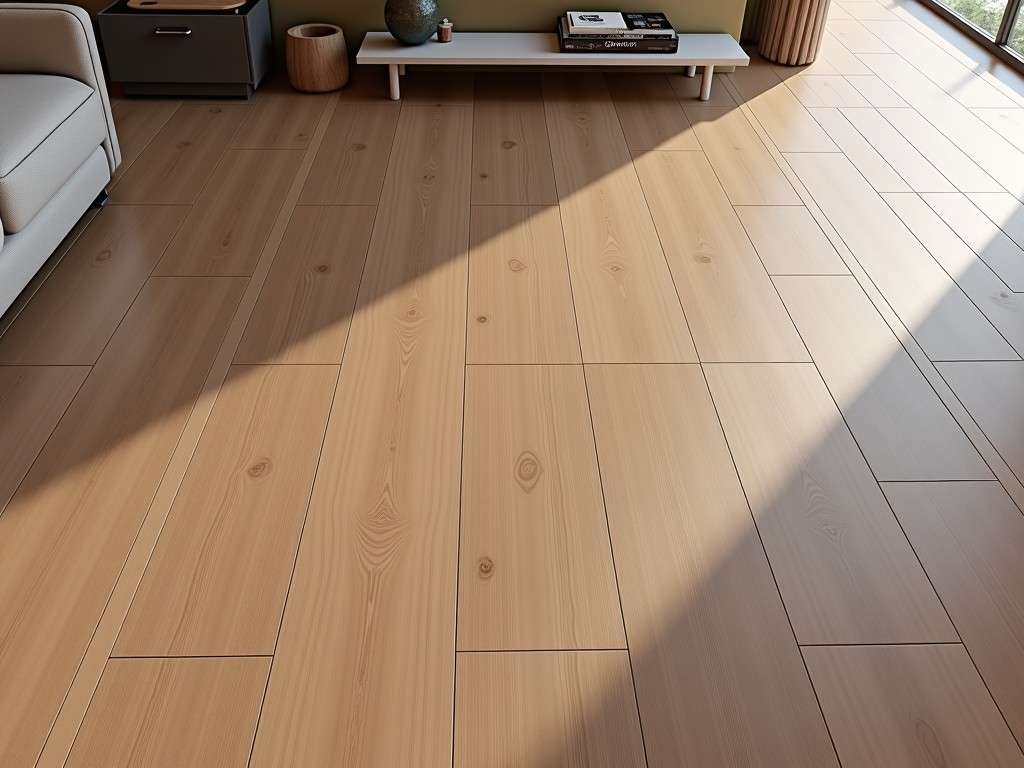
Luxury vinyl tile (LVT) combines a polyvinyl chloride core with a photographic wear layer that replicates wood grain at high resolution. For OEM partners, supplying a wood‑look LVT means delivering a flooring product that meets strict dimensional stability, wear resistance, and aesthetic consistency requirements.
The core is typically a calcium carbonate‑filled PVC formulation, providing rigidity and impact resistance while keeping weight manageable for large‑format tiles. A transparent wear layer, usually 0.3 mm to 0.7 mm thick, protects the printed design from scratches, stains, and UV fading. An embossed surface aligns with the printed grain to create a tactile feel that matches the visual appearance.
Key performance indicators are defined by ASTM standards and include wear layer thickness, indentation resistance, dimensional change after heat exposure, and slip resistance. These values determine suitability for commercial environments such as retail, hospitality, and healthcare facilities.
| Property | Typical Value | Test Method |
|---|---|---|
| Wear layer thickness | 0.3 mm – 0.7 mm | ASTM F410 |
| Indentation resistance (static load) | ≤0.05 mm after 24 h | ASTM F1914 |
| Dimensional change after heat exposure | ≤0.25 % length/width | ASTM F2199 |
| Slip resistance (wet) | R10 (DIN 51130) | ASTM E303 |
OEM projects often require adjustments to tile size, wear layer, and surface finish to match brand specifications and installation constraints. These variables are discussed during the quoting phase to ensure tooling and production runs meet the agreed tolerances.
In retail environments, the wood‑look LVT offers a warm visual that withstands heavy foot traffic and frequent cleaning cycles, reducing long‑term maintenance costs. Hospitality projects benefit from the product’s ability to replicate premium hardwood while resisting moisture ingress from spills and cleaning agents. Healthcare installations value the seamless, non‑porous surface that supports infection‑control protocols and can be installed over existing subfloors with minimal preparation.
Quality control begins with incoming raw material testing for PVC purity and filler content, followed by in‑line monitoring of extrusion thickness and wear‑layer adhesion. Finished tiles undergo batch sampling for abrasion resistance (Taber ASTM D4060), dimensional stability (ASTM F2199), and chemical resistance (ASTM F925). Results are logged and compared against specification limits before release for shipment.
Tiles are stacked in corrugated cartons with edge protectors and shrink‑wrapped to prevent movement during transit. Palletized loads are secured with strapping and corner boards, allowing safe handling by forklift or pallet jack. For export shipments, moisture‑barrier liners and ISPM‑15 compliant pallets are used to meet international regulations.
Can dimensions be customized? Yes, tile length, width, and thickness can be adjusted within standard extrusion limits to suit project layouts.
What information is required before quotation? We need target size, wear layer thickness, desired emboss, order volume, and any specific performance criteria (e.g., slip rating, chemical resistance).
How are samples arranged? Samples are produced from the same tooling as production runs and shipped via express courier with protective packaging.
To discuss OEM capabilities, request technical datasheets, or arrange sample shipments, contact our engineering team.
National patents
Vinyl flooring line
K+ SQ.M capacity
Founded