46
National patents
Linoleum sheet vinyl flooring combines a renewable linoleum base with a polyvinyl chloride wear layer to produce a resilient sheet product suitable for heavy‑duty commercial environments. The core
Order this product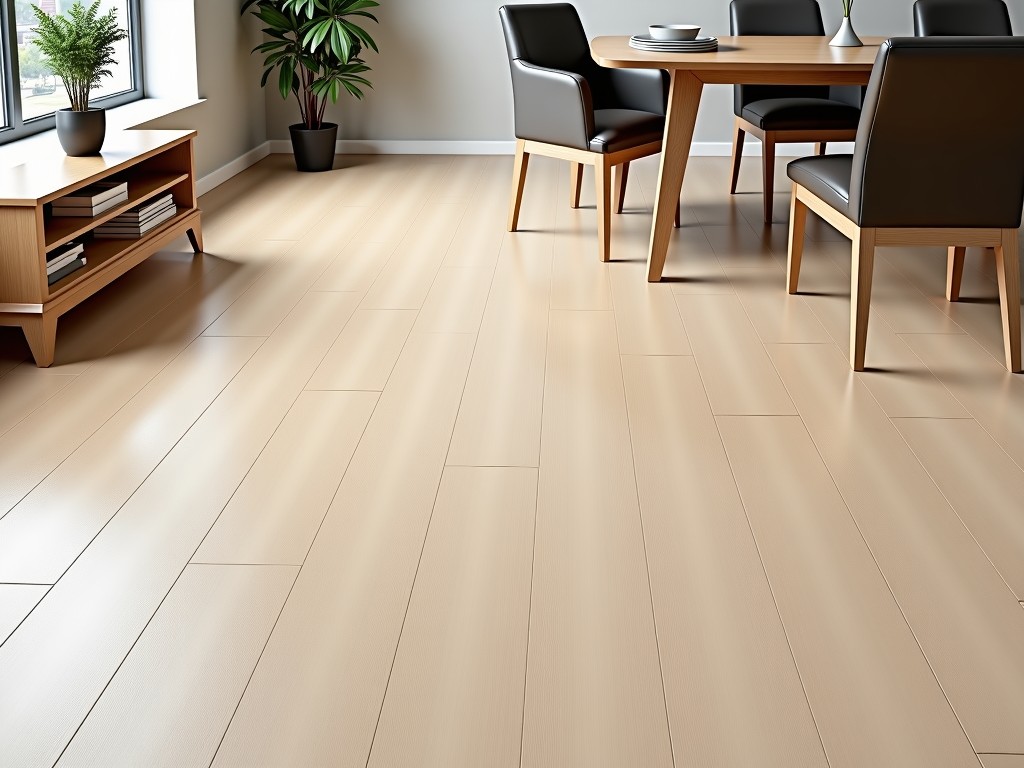
Linoleum sheet vinyl flooring combines a renewable linoleum base with a polyvinyl chloride wear layer to produce a resilient sheet product suitable for heavy‑duty commercial environments. The core typically consists of oxidized linseed oil, wood flour, cork dust, and limestone pigments, while the surface layer provides abrasion resistance and chemical stability. This combination yields a floor covering that maintains dimensional stability under temperature fluctuations and offers a predictable service life in settings such as factories, warehouses, and laboratories.
The following table lists typical values for a 2.0 mm overall thickness product with a 0.30 mm wear layer. Actual values can be adjusted according to project requirements.
| Property | Typical Value | Test Standard |
|---|---|---|
| Overall thickness | 2.0 mm | ISO 24346 |
| Wear layer thickness | 0.30 mm | ISO 24340 |
| Density | 1.45 g/cm³ | ISO 1183 |
| Dimensional change (heat) | ≤0.15 % (after 6 h at 80 °C) | ISO 23999 |
| Slip resistance (R value) | R10 (wet) | DIN 51130 |
| Fire classification | Bfl‑s1 | EN 13501‑1 |
| Total VOC emission | ≤0.5 mg/m³ | ISO 16000‑9 |
Production begins with the mixing of oxidized linseed oil, wood flour, cork dust, and mineral fillers to form the linoleum base.
In‑line quality monitors check thickness, width, and adhesion strength at 10 m intervals. Any deviation beyond ±0.05 mm triggers automatic rejection, minimizing waste and ensuring consistent product performance.
Industrial buyers select this flooring when a combination of chemical resistance, ease of maintenance, and underfoot comfort is required. The linoleum core provides natural antimicrobial properties, while the PVC wear layer resists oils, solvents, and mild acids commonly found in manufacturing environments.
Product dimensions, surface texture, and wear‑layer thickness can be adjusted to match specific performance criteria. Customers often request variations to meet local building codes or to achieve a desired aesthetic.
Each production batch undergoes a series of inspections before release. Thickness and width are measured with laser gauges; adhesion between layers is tested using a peel‑strength apparatus according to ISO 24345. Surface hardness is evaluated with a Shore A durometer, targeting a range of 85‑95 for the wear layer.
Finished rolls are subject to a visual inspection for defects such as bubbles, streaks, or misregistration. Rolls that exceed a defect density of 0.2 % are re‑processed or rejected. Documentation of test results is provided with each shipment upon request.
Finished sheets are rolled onto rigid cores with a diameter of 150 mm to prevent deformation during transit. Each roll is wrapped in a low‑density polyethylene film and placed inside a corrugated cardboard carton sized to the roll length and diameter. Palletizing follows ISO 1496‑1 standards, with a maximum stack height of 2 m to avoid crushing.
For overseas shipments, rolls are secured with polypropylene straps and corner protectors. Desiccant packs are included to maintain relative humidity below 60 % inside the packaging, reducing the risk of moisture‑related deformation.
To discuss your specific requirements, provide the application details, desired dimensions, and quantity. Our technical team will respond with a detailed quotation and lead‑time estimate.
Contact UsNational patents
Vinyl flooring line
K+ SQ.M capacity
Founded