46
National patents
Vinyl floor welding rods are consumable filler materials used to create seamless, watertight joints in PVC-based flooring systems. Their performance depends on precise material formulation,
Order this product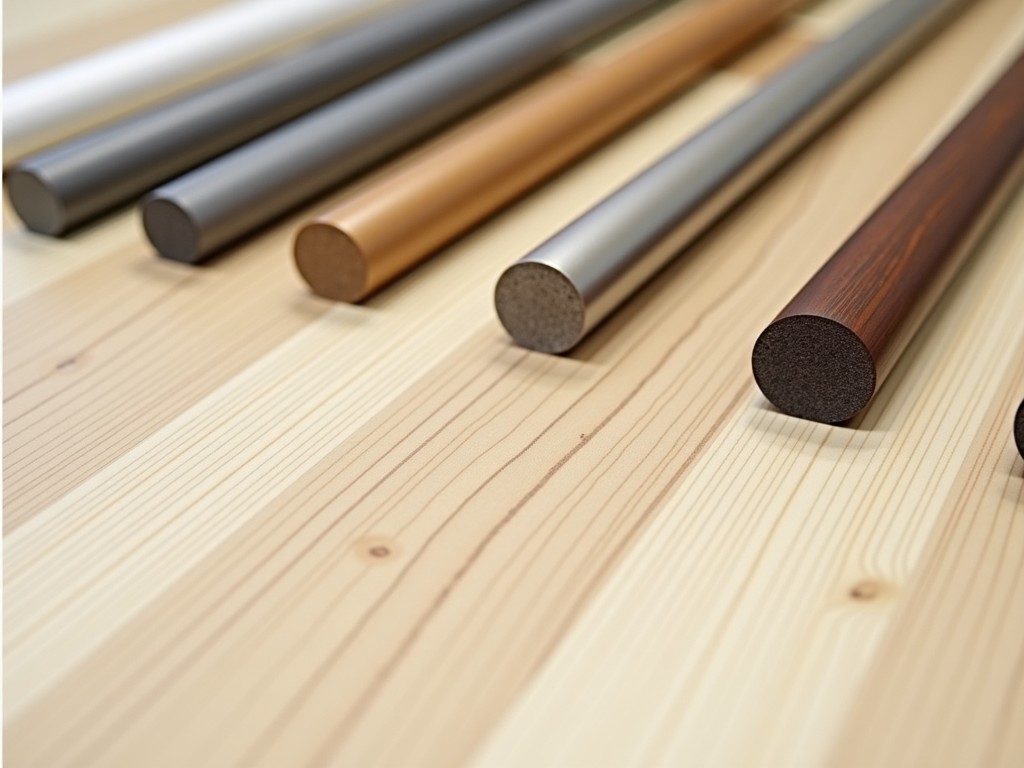
Vinyl floor welding rods are consumable filler materials used to create seamless, watertight joints in PVC-based flooring systems. Their performance depends on precise material formulation, dimensional consistency, and melt behavior during hot‑air welding.
The rod consists primarily of polyvinyl chloride (PVC) resin blended with a calibrated amount of plasticizer to achieve flexibility at welding temperatures. Stabilizers and pigments are added in minor quantities to protect against degradation and provide color matching.
The compound is fed into a twin‑screw extruder where it is melted and homogenized under controlled temperature zones. The melt is then forced through a circular die to form a continuous rod, which is immediately cooled in a water bath to lock dimensions.
After cooling, the rod is cut to specified lengths, inspected for diameter tolerance, and wound onto spools or placed in rigid cartons. Inline laser gauging monitors diameter every few seconds to maintain ±0.05 mm tolerance.
| Property | Typical Value | Unit | Notes / Test Method |
|---|---|---|---|
| Nominal Diameter | 3.0 | mm | ±0.05 mm (laser gauge) |
| Length per Spool | 50 | m | Custom lengths available |
| Melting Point | 80‑85 | °C | DSC, peak |
| Melt Flow Index (MFI) | 6.0‑8.0 | g/10 min (190 °C, 2.16 kg) | ASTM D1238 |
| Tensile Strength | 15‑18 | MPa | ASTM D638 |
| Elongation at Break | 120‑150 | % | ASTM D638 |
| Color Options | Standard (RAL 9001, 9005) & custom | – | Pigment loading ≤1 wt % |
Vinyl floor welding rods are selected when the flooring material and the filler must share comparable melt viscosity and chemical resistance to avoid weak joints or premature degradation.
They are used in heat‑air welding of sheet vinyl, luxury vinyl tile (LVT), and vinyl composite tile (VCT) where a continuous, watertight seam is required for hygiene or safety.
Each production lot undergoes a series of checks to verify that the rod meets the specification table above.
Diameter is monitored continuously; any deviation beyond ±0.05 mm triggers an automatic alarm and rejects the segment.
Melt flow index is measured on excised samples using a calibrated extrusion plastometer at 190 °C/2.16 kg.
Visual inspection looks for surface defects such as pits, discoloration, or foreign particles; only rods with a smooth, uniform finish are approved for packaging.
Manufacturers can adjust several parameters to match specific flooring systems or project requirements.
Rods are wound onto polypropylene spools that protect against deformation and moisture ingress.
Each spool is placed in a corrugated carton with a desiccant packet; cartons are stacked on pallets and stretch‑wrapped for stability.
For export, pallets are fitted with corner protectors and labeled with handling instructions; shipment details include material safety data sheet (MSDS) and RoHS/REACH compliance documentation.
For technical data sheets, sample requests, or project‑specific inquiries, please reach out to our engineering team.
National patents
Vinyl flooring line
K+ SQ.M capacity
Founded