46
National patents
The product consists of polyvinyl chloride (PVC) sheeting formed into continuous rolls, coated with a wear‑resistant top layer and integrated with an antimicrobial additive that inhibits bacterial
Order this product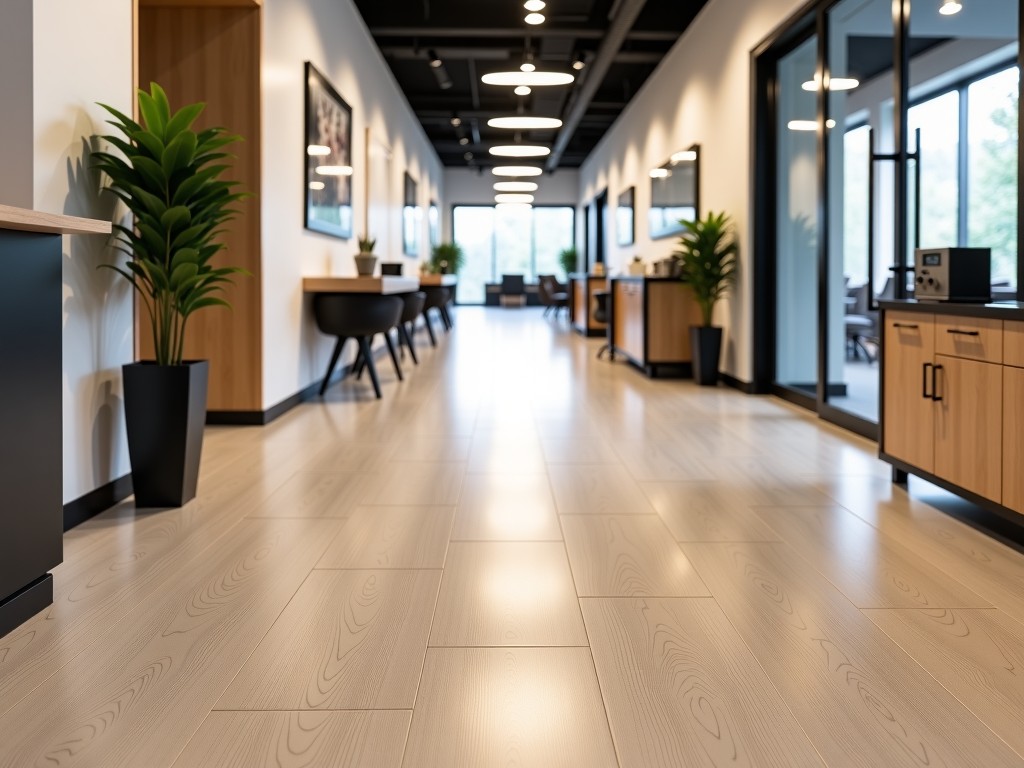
The product consists of polyvinyl chloride (PVC) sheeting formed into continuous rolls, coated with a wear‑resistant top layer and integrated with an antimicrobial additive that inhibits bacterial growth on the surface. Rolls are supplied in widths ranging from 1.0 m to 2.0 m and lengths customized to project requirements, reducing seams in large‑area installations.
Base layer: calendered PVC resin with plasticizers for flexibility. Intermediate layer: glass‑fiber reinforcement for dimensional stability. Wear layer: UV‑cured polyurethane with a thickness typically between 0.3 mm and 0.7 mm, providing resistance to abrasion, staining, and chemical exposure. Antimicrobial agent: silver‑ion or zinc‑pyrithione dispersed uniformly within the wear layer at concentrations that achieve a >99.9 % reduction of Staphylococcus aureus and Escherichia coli after 24 h exposure per ISO 22196.
The additive releases ions that interact with bacterial cell membranes, disrupting metabolic functions and preventing reproduction. Because the agent is bound within the polymer matrix, leaching is minimal, ensuring long‑term activity throughout the product’s service life, which is commonly rated for 5–10 years under normal commercial foot traffic.
Compounded PVC is extruded into a sheet, laminated with the wear layer, then passed through a calendar to achieve final thickness. The antimicrobial additive is introduced during the compounding stage to ensure homogeneous distribution. Rolls are cooled, wound onto cores, and cut to length under tension‑controlled conditions to avoid edge deformation.
| Property | Typical Value | Unit |
|---|---|---|
| Total thickness | 2.0 (customizable) | mm |
| Wear layer thickness | 0.5 (customizable) | mm |
| Weight | 2.4 (depends on thickness) | kg/m² |
| Abrasion resistance (Taber) | ≤150 (CS‑10 wheels, 500 cycles) | mg loss |
| Antimicrobial efficacy (ISO 22196) | ≥99.9 % reduction | – |
| Fire rating (EN 13501‑1) | Bfl‑s1 (standard) | – |
In healthcare facilities, the seamless roll format minimizes crevices where pathogens can accumulate, while the antimicrobial surface reduces bioburden between cleaning cycles. Educational institutions benefit from low‑maintenance flooring that withstands high foot traffic and frequent cleaning with neutral detergents. Retail environments use the product for its aesthetic versatility and ability to be installed quickly over large floor plates, reducing downtime during remodels.
Each roll undergoes in‑line thickness monitoring via laser gauging, with tolerances maintained within ±0.1 mm. Surface samples are taken per batch for antimicrobial verification using ISO 22196 protocol. Wear layer adhesion is measured by peel‑off testing, targeting a minimum of 1.5 N/mm. Finished rolls are inspected for visual defects, edge straightness, and winding tension before packaging.
Rolls are wrapped in polyethylene shrink film, placed on corrugated cardboard cores, and secured with strapping. Standard pallet configuration holds up to 12 rolls, each protected by corner boards and stretch‑wrapped for moisture resistance. Shipping documents include material safety data sheets (MSDS) and product conformity declarations.
To obtain a detailed technical data sheet, discuss custom thickness, wear layer, or color requirements, or request a sample, please contact our technical sales team.
Request Technical Data SheetNational patents
Vinyl flooring line
K+ SQ.M capacity
Founded