46
National patents
Homogeneous vinyl tile flooring consists of a single-layer composition where color and pattern extend uniformly through the entire thickness. This structure eliminates surface wear concerns because
Order this product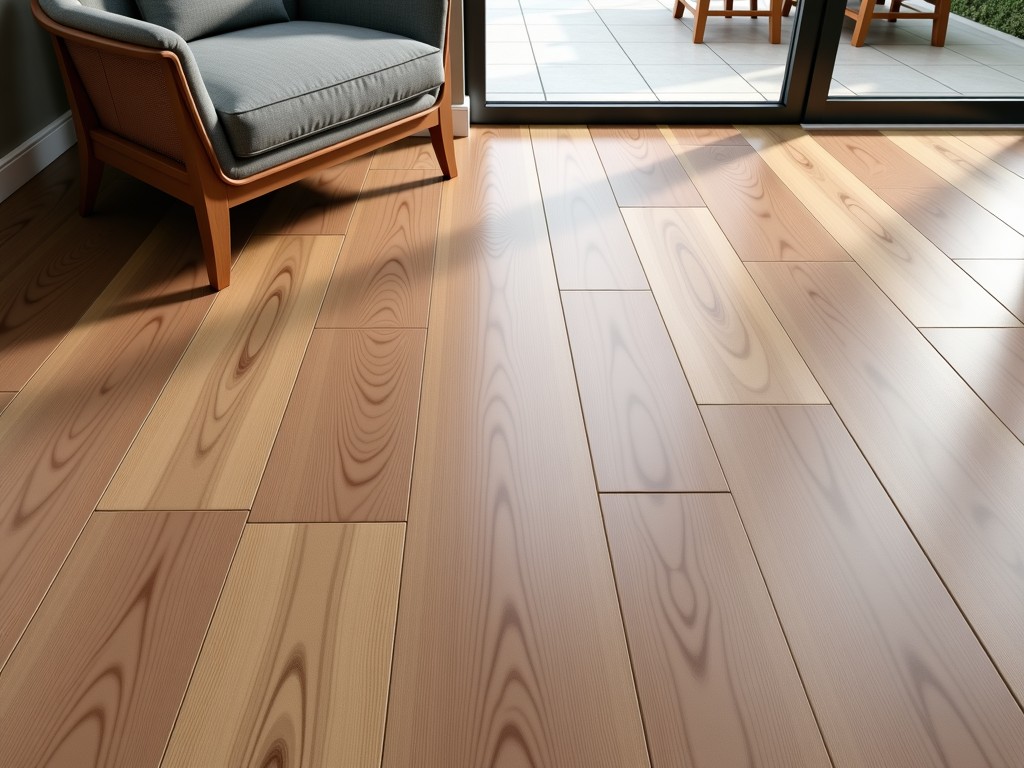
Homogeneous vinyl tile flooring consists of a single-layer composition where color and pattern extend uniformly through the entire thickness. This structure eliminates surface wear concerns because the visual layer cannot be worn away.
Typical thicknesses range from 2.0 mm to 3.0 mm, with a wear layer that is integral to the tile rather than a separate coating. The material is produced by calendaring polyvinyl chloride resin with plasticizers, stabilizers, and pigment compounds under controlled temperature and pressure.
The base resin is typically suspension‑grade PVC with a K‑value between 65 and 70, providing a balance of flexibility and mechanical strength.
Additive packages include phthalate‑free plasticizers, calcium‑zinc stabilizers, and lubricants that meet REACH and RoHS requirements.
Pigments are finely ground inorganic or organic dyes dispersed to achieve ≤5 µm particle size, ensuring uniform color throughout the tile thickness.
Resulting tiles exhibit a Shore A hardness of 90–95, a tensile strength of ≥15 MPa, and a dimensional change of less than 0.1 % after 24 h immersion in water at 23 °C.
The calender forms a molten PVC sheet by passing the compound through heated rollers under precise pressure, achieving thickness uniformity within ±0.05 mm.
After sheet formation, the material undergoes embossing with a steel roller to impart the desired surface texture, which is locked in during cooling.
Surface texture is followed by a cooling stage that stabilizes the polymer structure, preventing residual stresses that could cause warping.
Final cutting is performed with rotary die cutters to specified dimensions, and tiles are stacked for quality inspection before packaging.
| Property | Typical Value |
|---|---|
| Thickness | 2.0 mm – 3.0 mm (customizable) |
| Shore A Hardness | 90–95 |
| Tensile Strength | ≥15 MPa |
| Abrasion Resistance (Taber CS‑10, 1000 cycles) | ≤0.02 g loss |
| Slip Resistance (R rating, DIN 51130) | R9–R11 (surface dependent) |
| Dimensional Stability (24 h, 23 °C, water immersion) | ≤0.1 % change |
| Fire Rating (EN 13501‑1) | B‑fl‑s1 (standard), C‑fl‑s1 available |
In healthcare facilities, the homogeneous construction provides a seamless, non‑porous surface that supports rigorous cleaning protocols and reduces microbial harborage.
Educational institutions benefit from the high abrasion resistance and low maintenance, which extend service life in high‑traffic corridors and classrooms.
Retail environments choose this flooring for its ability to retain color uniformity under constant foot traffic and exposure to cleaning agents, preserving brand aesthetics.
Industrial settings such as laboratories and clean rooms rely on the chemical resistance and electrostatic dissipative options that meet ISO 14644‑1 cleanliness standards.
Each production lot undergoes thickness verification using laser micrometry at five points per tile to ensure tolerance within ±0.05 mm.
Color uniformity is assessed with a spectrophotometer, accepting ΔE < 1.5 against the approved master batch.
Mechanical properties are validated by tensile testing on specimens cut from random tiles, confirming ≥15 MPa strength.
Surface abrasion resistance is checked via Taber abraser on a sample set, verifying mass loss below the specified threshold.
Final visual inspection looks for defects such as bubbles, inclusions, or misregistration, with a reject rate kept under 0.2 %.
Tiles are packed in corrugated cartons with internal polyethylene liners to protect against moisture ingress during transit.
Cartons are stacked on pallets, secured with stretch film, and labeled with product code, batch number, and handling instructions.
For export shipments, pallets are treated with ISPM‑15 compliant heat‑stamped wood or use synthetic pallets to meet international phytosanitary requirements.
Typical lead time is 3–4 weeks for standard sizes and colors; custom designs or additives may extend this period based on tooling and material availability.
Can dimensions be customized? Yes, length, width, and thickness can be tailored to project specifications; tooling costs may apply for non‑standard sizes.
What information is required before quotation? Required details include desired dimensions, thickness, color reference (Pantone/RAL or sample), surface finish, any additive requirements, and estimated quantity.
What materials are available? Base PVC resin with optional plasticizer packages (phthalate‑free), stabilizer systems, and pigment grades; antimicrobial or anti‑static additives are available upon request.
How is quality inspected? Incoming raw materials are tested for K‑value and purity; in‑process checks include thickness, emboss depth, and color; final inspection covers dimensional stability, hardness, abrasion, and visual defects.
What packaging methods are available? Standard carton packing with PE liner, palletized stretch‑wrapped loads, and optional crate packing for delicate edges.
How are export shipments protected? Moisture barriers, corner boards, and compliant palletizing ensure protection against humidity and mechanical damage during transit.
What is the typical production lead time? Standard products: 3–4 weeks; customized colors or additives: 4–6 weeks depending on tooling and material availability.
How are samples arranged? Sample tiles (up to 10 × 10 cm) can be shipped via express courier; charges are credited against the first order.
To discuss project‑specific requirements, request a detailed quotation, or arrange sample shipment, please reach out using the contact form below.
National patents
Vinyl flooring line
K+ SQ.M capacity
Founded