46
National patents
Linoleum flooring is a resilient sheet product made primarily from oxidized linseed oil, wood flour, cork dust, and mineral fillers calendared onto a jute or polyester backing. It offers a
Order this product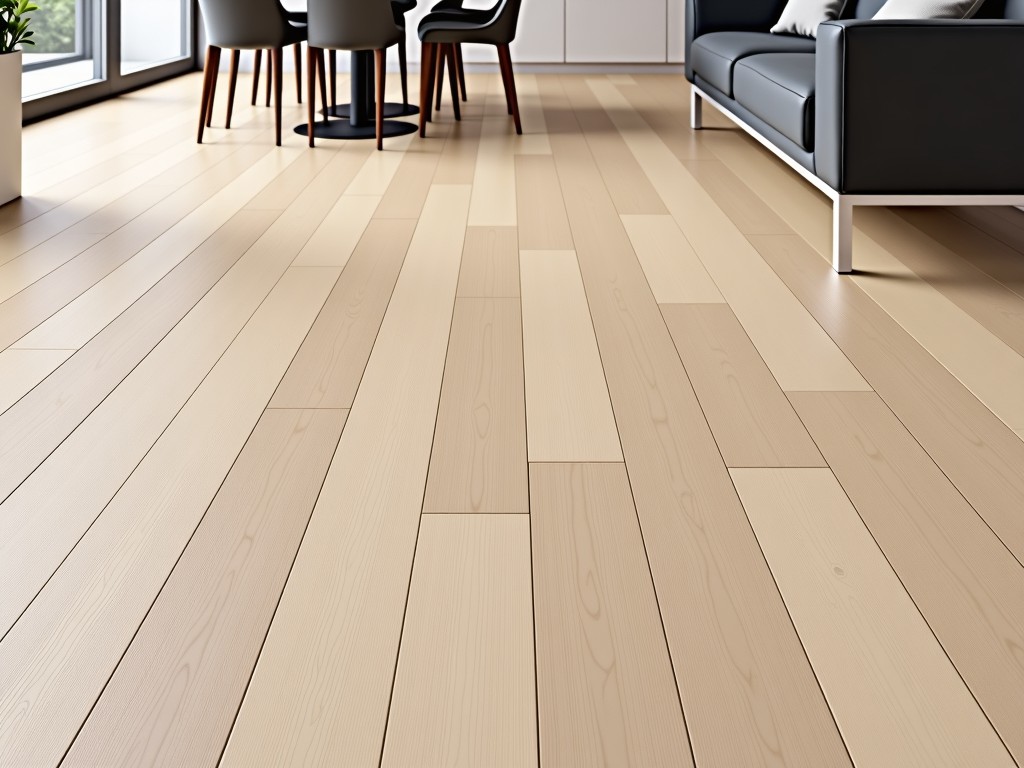
Linoleum flooring is a resilient sheet product made primarily from oxidized linseed oil, wood flour, cork dust, and mineral fillers calendared onto a jute or polyester backing. It offers a combination of flexibility, impact resistance, and natural antimicrobial properties derived from the linseed oil oxidation process. These characteristics make it suitable for environments where a seamless, low‑maintenance floor is required.
Production begins with mixing the raw materials to a uniform batch, which is then heated and fed through a series of calender rolls to achieve the target thickness and width. The continuous sheet is subsequently cured in ovens to stabilize the linseed oil matrix before being wound onto cores.
Thickness, width, and roll length are held to tight tolerances to ensure consistent performance across installations. Typical thickness tolerances are ±0.10 mm, width tolerances ±2 mm, and roll length tolerances ±0.5 % of the nominal length. These limits are verified by laser gauges and mechanical measurers during in‑line inspection.
Customers can specify a range of geometric and surface attributes to match the functional demands of their facility. Options include overall thickness, roll width, roll length, surface embossing, and color pigmentation.
Typical dimensional ranges support most industrial layouts: thicknesses from 2.0 mm to 4.0 mm, widths from 914 mm to 1829 mm, and roll lengths up to 30 m. Specialty additives such as slip‑resistant granules or antibacterial agents can be incorporated upon request.
| Property | Typical Value / Range | Notes |
|---|---|---|
| Thickness | 2.0 mm – 4.0 mm | ±0.10 mm tolerance |
| Width | 914 mm – 1829 mm | ±2 mm tolerance |
| Roll Length | Up to 30 m | ±0.5 % tolerance |
| Weight per m² | 2.2 kg – 3.0 kg | Depends on thickness & filler content |
| Tensile Strength | ≥1.2 MPa | ASTM D412, machine direction |
| Elongation at Break | ≥150 % | ASTM D412 |
| Fire Rating | Bfl‑s1 (EN 13501-1) | Smoke development low |
| VOC Emission | A+ (AgBB) | Low emitting, suitable for indoor air quality |
Quality verification follows a documented protocol that includes dimensional checks, tensile testing, and surface inspection. Samples from each batch are subjected to accelerated wear testing and chemical resistance assessments per ASTM F1515 and ISO 10581. Results are retained for traceability and supplied with the shipment documentation.
In factories, warehouses, and laboratories, linoleum offers performance benefits that stem from its material composition. The oxidized linseed oil matrix provides inherent resistance to oils, fats, and mild chemicals, reducing the risk of staining or degradation. Its natural anti‑static properties help control electrostatic discharge in electronics assembly areas. Additionally, the flooring’s low VOC contribution and biodegradable content support sustainability goals pursued by many industrial operators.
Finished rolls are packaged to protect against moisture, mechanical damage, and contamination during transit. Each roll is wrapped in a polyethylene sleeve, placed on a sturdy cardboard or plastic core, and secured with strapping to a pallet. A moisture‑barrier layer and corner protectors are added for export shipments to maintain product integrity.
To discuss a custom roll configuration or request a quotation, please provide the required project details such as desired thickness, width, length, and any special additives. Our technical team will respond with a feasibility assessment and lead‑time estimate within one business day.
National patents
Vinyl flooring line
K+ SQ.M capacity
Founded