46
National patents
Heavy duty PVC sheet flooring is manufactured from polyvinyl chloride resin blended with plasticizers, stabilizers, and reinforcing fillers to achieve a dense, wear‑resistant surface suitable for
Order this product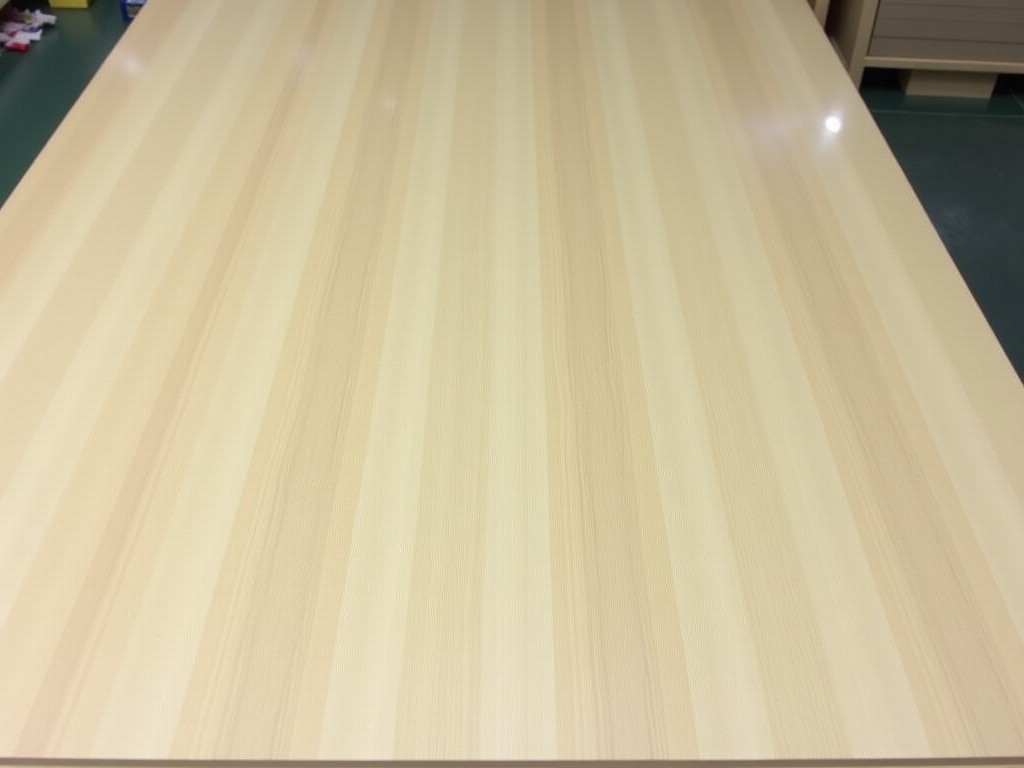
Heavy duty PVC sheet flooring is manufactured from polyvinyl chloride resin blended with plasticizers, stabilizers, and reinforcing fillers to achieve a dense, wear‑resistant surface suitable for industrial environments.
The sheet format allows continuous installation over large areas, minimizing seams and facilitating rapid deployment in factories, warehouses, and logistics centers.
The base polymer is PVC (polyvinyl chloride) typically comprising 55‑65 % of the formulation by weight.
Plasticizers such as phthalate or non‑phthalate esters provide flexibility, while calcium‑zinc stabilizers prevent degradation during processing and service life.
Reinforcing fillers like calcium carbonate increase stiffness and impact resistance, allowing the sheet to withstand point loads up to 2 kN without permanent deformation.
| Property | Typical Value | Test Method |
|---|---|---|
| Overall thickness | 2.0 mm – 3.0 mm | ISO 24346 |
| Wear layer thickness | 0.3 mm – 0.5 mm | ISO 10582 |
| Shore A hardness | 90 – 95 | ISO 868 |
| Tensile strength (MD) | ≥ 15 MPa | ISO 527‑1 |
| Elongation at break | ≥ 150 % | ISO 527‑1 |
| Chemical resistance (oil, grease) | No visible change after 24 h immersion | ISO 26987 |
The dense PVC matrix provides a low coefficient of friction (≈ 0.3 – 0.4) that facilitates easy movement of pallet jacks and reduces wear on equipment wheels.
Water absorption remains below 0.1 % after 24 h immersion, preventing swelling and maintaining dimensional stability in humid environments.
Impact resistance, measured by the falling ball test, shows no cracking when a 500 g steel ball is dropped from 1 m height onto the surface.
In manufacturing plants, the flooring must resist oil spills, chemical splashes, and heavy static loads while providing a cleanable surface that does not harbor contaminants.
These characteristics reduce maintenance downtime and extend service life compared to coated concrete or epoxy finishes.
All variations are formulated to maintain the core mechanical properties while meeting specific environmental or aesthetic constraints.
Each batch undergoes incoming resin verification via melt flow index testing to ensure consistent viscosity.
During extrusion, thickness is monitored online with laser gauges, maintaining tolerance within ± 0.05 mm.
Finished sheets are sampled for Shore hardness, tensile strength, and chemical resistance before release, with results recorded in a traceable QC database.
Sheets are rolled on sturdy cardboard cores with protective polyethylene film to prevent surface scratches during transit.
Standard roll widths are 1.2 m or 1.5 m, with lengths up to 30 m, optimizing container utilization.
Palletized rolls are secured with strapping and corner protectors, meeting ISPM‑15 standards for export shipments.
To discuss your specific flooring requirements, provide load expectations, environmental conditions, and desired dimensions.
National patents
Vinyl flooring line
K+ SQ.M capacity
Founded