46
National patents
Marmoleum homogeneous linoleum vinyl flooring is a resilient sheet product manufactured from renewable raw materials such as linseed oil, wood flour, cork dust, and natural pigments, combined with a
Order this product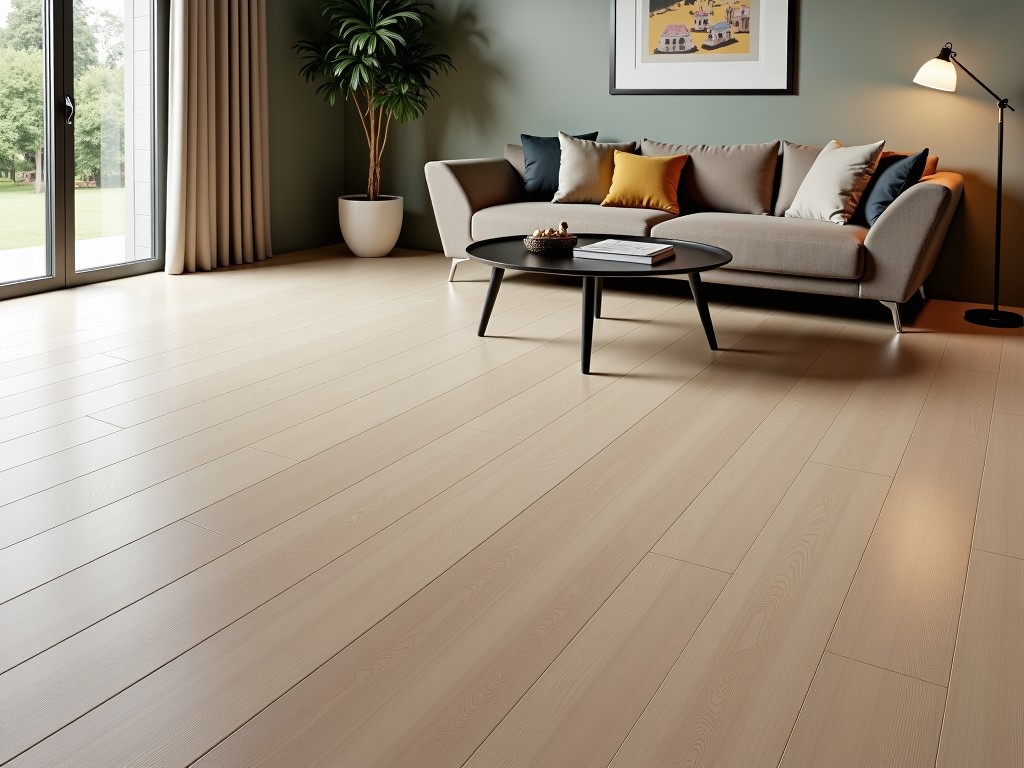
Marmoleum homogeneous linoleum vinyl flooring is a resilient sheet product manufactured from renewable raw materials such as linseed oil, wood flour, cork dust, and natural pigments, combined with a polyvinyl chloride (PVC) wear layer for enhanced durability. The homogeneous structure means the composition is uniform throughout the thickness, providing consistent performance from surface to backing.
| Property | Typical Value |
|---|---|
| Overall Thickness | 2.0 mm to 3.0 mm (customizable) |
| Wear Layer Thickness | 0.3 mm to 0.5 mm (PVC) |
| Width | 2.0 m (standard rolls) |
| Length per Roll | Up to 30 m (depends on thickness) |
| Weight | 2.5 kg/m² to 3.5 kg/m² |
| Dimensional Stability (ISO 23999) | ≤0.15 % change after 24 h at 70 °C/90 % RH |
| Slip Resistance (Ramp Test, DIN 51130) | R10 (standard surface), R11 available with embossing |
| Fire Rating (EN 13501-1) | Bfl‑s1 (standard), Cfl‑s1 with additive |
| VOC Emission (ISO 16000‑9) | ≤0.05 mg/m³ (low emitting) |
| Chemical Resistance (ISO 26987) | Resistant to diluted acids, alkalis, alcohols, and common cleaning agents |
The process begins with precise metering of linseed oil, wood flour, cork, and pigments, which are mixed under controlled temperature to form a homogenous linoleum compound. This compound is then calendared into a continuous sheet of the desired thickness, after which a PVC wear layer is co‑extruded onto the surface to provide abrasion resistance.
Following calendaring, the sheet passes through a curing oven where the linseed oil undergoes oxidation, locking the structure and imparting natural antimicrobial properties. The cured sheet is then cooled, cut to roll width, and subjected to surface treatment—either left smooth for easy cleaning or embossed for enhanced slip resistance.
Throughout production, inline sensors monitor thickness, density, and color consistency, enabling real‑time adjustments to maintain tight tolerances.
In industrial settings such as manufacturing plants and warehouses, the flooring’s resistance to oils, solvents, and frequent cleaning reduces downtime caused by surface degradation. Its homogeneous construction prevents delamination even under heavy wheel loads from pallet jacks or forklifts.
Healthcare facilities benefit from the low VOC emission and inherent antimicrobial nature of linoleum, contributing to improved indoor air quality and easier infection control protocols. The seamless installation possible with heat‑welded joints eliminates crevices where pathogens could harbor.
Educational institutions select this flooring for its durability under high foot traffic and its ability to withstand frequent scrubbing with neutral pH cleaners without loss of color or surface integrity, maintaining a safe walking surface for students and staff.
Each roll undergoes a series of inspections before release: thickness variance measured at five points across the width, wear layer adhesion tested via peel test (ISO 24345), and surface hardness assessed with a Shore D durometer. Results are logged against statistical process control charts to detect drift early.
Finished goods are sampled for dimensional stability after exposure to elevated humidity and temperature, ensuring that installed flooring will not exhibit noticeable shrinking or expanding under typical service conditions. Additionally, a random batch is subjected to accelerated wear simulation (Taber Abrader) to verify that the wear layer meets the declared abrasion resistance class.
All test records are retained for traceability, and any deviation from specification triggers a root‑cause analysis and corrective action before the batch is cleared for shipment.
Can dimensions be customized? Yes, thickness, width, and length can be adjusted to project requirements; please provide specifications for a quotation.
What information is required before quotation? Required details include intended application area dimensions, desired thickness, wear layer preference, color or finish, and any special treatments such as anti‑static or enhanced slip resistance.
What materials are available? The base linoleum compound uses linseed oil, wood flour, cork, and natural pigments; the wear layer is PVC, with optional polyurethane or conductive additives.
How is quality inspected? Each roll is checked for thickness tolerance, wear layer adhesion, dimensional stability, and surface hardness; representative samples undergo chemical resistance and fire rating tests.
What packaging methods are available? Rolls are wrapped in polyethylene film, placed on sturdy cardboard cores, and loaded onto pallets with corner protectors; moisture‑barrier wrapping is offered for export.
How are export shipments protected? Pallets are strapped and stretch‑wrapped, then secured in containers with shock‑absorbing dunnage; optional fumigation‑free pallets comply with ISPM‑15.
What is the typical production lead time? Lead time varies with order size and customization but generally ranges from 2 to 4 weeks after receipt of approved technical drawings.
For technical data sheets, sample requests, or to discuss a specific project, please contact our engineering team.
National patents
Vinyl flooring line
K+ SQ.M capacity
Founded