46
National patents
Luxury interior wall coverings are decorative surface systems designed for high‑end commercial and residential spaces. They combine a stable substrate with a printed or textured finish layer and a
Order this product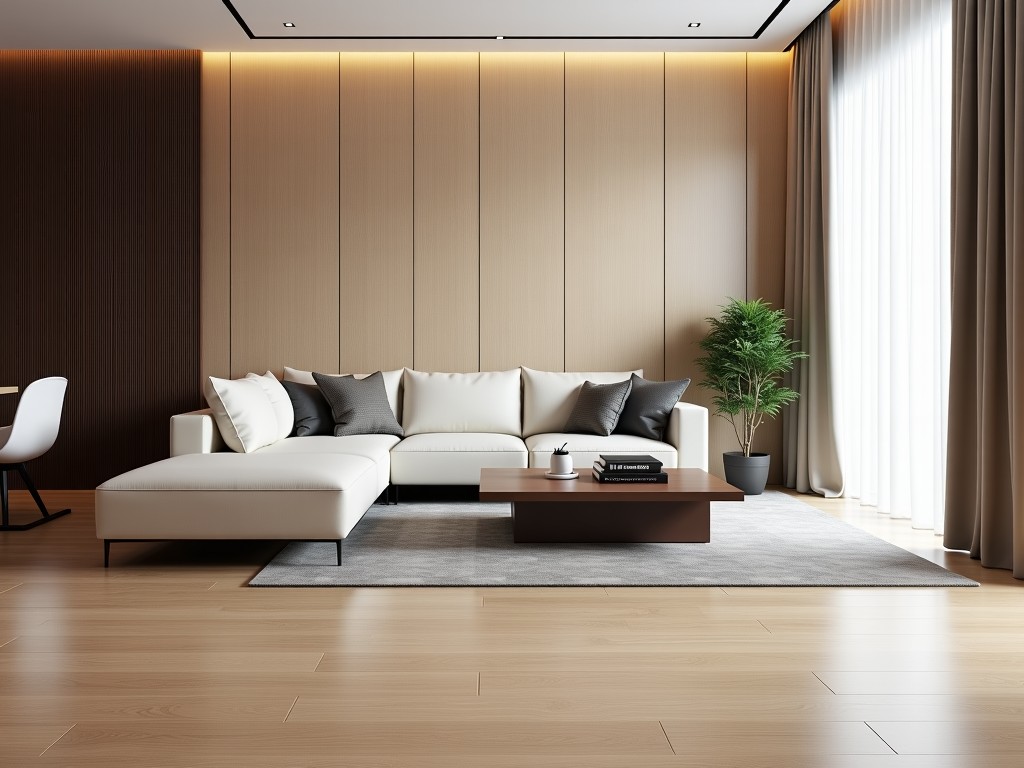
Luxury interior wall coverings are decorative surface systems designed for high‑end commercial and residential spaces. They combine a stable substrate with a printed or textured finish layer and a protective topcoat to deliver aesthetic impact while meeting functional durability requirements.
The typical construction consists of three primary layers: a dimensionally stable backing (often non‑woven polyester or fiberglass mat), a printed or embossed design layer using PVC‑free polyurethane or acrylic pigments, and a clear wear‑resistant topcoat formulated for scratch and UV stability. Overall thickness ranges from 0.8 mm to 1.5 mm depending on the intended use, with a nominal weight between 350 g/m² and 600 g/m².
These wall coverings are engineered to withstand repeated cleaning, resist staining, and maintain color fidelity under indoor lighting. Abrasion resistance is measured per ASTM D4060, typically showing less than 50 mg loss after 1000 cycles. Flame spread ratings commonly achieve Class B (ASTM E84) with smoke development under 450. Volatile organic compound emissions are kept below 0.5 mg/m³ as per ISO 16000‑9.
| Property | Test Method | Typical Value | Unit |
|---|---|---|---|
| Overall Thickness | ISO 24346 | 0.8 – 1.5 | mm |
| Weight | ISO 23997 | 350 – 600 | g/m² |
| Abrasion Resistance | ASTM D4060 | < 50 | mg/1000 cycles |
| Flame Spread (ASTM E84) | ASTM E84 | Class B | – |
| VOC Emission | ISO 16000‑9 | < 0.5 | mg/m³ |
The seamless appearance and ability to reproduce high‑resolution patterns make these coverings suitable for environments where visual impact and long‑term surface integrity are critical. They are frequently selected for hotel guest rooms, luxury retail boutiques, corporate executive lobbies, and high‑end residential living areas because they provide a uniform finish that can be cleaned with mild detergents without damaging the decorative layer.
Manufacturers can adjust visual and physical attributes to meet specific project briefs. Customization is driven by the substrate choice, printing technology, and topcoat formulation, allowing control over pattern repeat, color depth, surface gloss, and mechanical performance.
Production begins with incoming inspection of raw materials for thickness, tensile strength, and chemical purity. The backing is coated with the design layer using a precision roll‑to‑roll printer, followed by UV curing or thermal drying to fix the image. A clear topcoat is then applied in a controlled environment to ensure uniform thickness and adhesion. In‑process monitoring includes wet film thickness gauges, color spectrophotometers, and adhesion tape tests. Finished rolls undergo a final visual inspection under standardized lighting and a roll‑to‑roll abrasion test to verify compliance with the agreed specification.
Rolls are wrapped in protective polyethylene film, placed on sturdy cardboard cores (typically 76 mm diameter), and stacked on pallets with corner protectors and stretch film to prevent shifting during transit. Each pallet is labeled with product code, batch number, and safety handling instructions. For export shipments, moisture‑barrier liners and climate‑controlled containers are available upon request to safeguard against humidity‑related deformation.
National patents
Vinyl flooring line
K+ SQ.M capacity
Founded