46
National patents
These wall coverings are engineered surfaces specifically developed for high-traffic educational environments. Designers prioritize abrasion resistance, impact tolerance, and low VOC emissions when
Order this product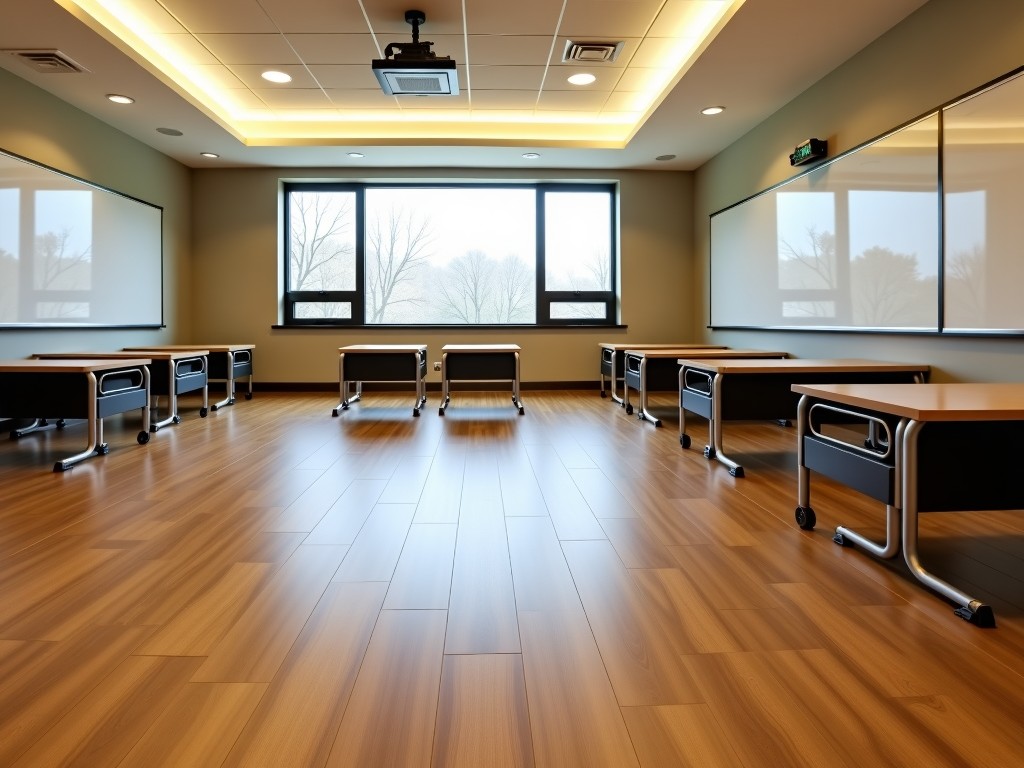
These wall coverings are engineered surfaces specifically developed for high-traffic educational environments.
Designers prioritize abrasion resistance, impact tolerance, and low VOC emissions when specifying wall finishes for classrooms.
Manufacturers adjust substrate composition, coating thickness, and surface texture to meet project-specific durability and aesthetic targets.
Common substrates include PVC‑based vinyl, fabric‑backed vinyl, and polymer‑coated non‑woven textiles.
| Material | Typical Thickness (mm) | Weight (g/m²) | Fire Rating (ASTM E84) | VOC Content (g/L) |
|---|---|---|---|---|
| PVC‑based vinyl | 0.35 | 450 | Class A | <0.5 |
| Fabric‑backed vinyl | 0.40 | 480 | Class A | <0.4 |
| Polymer‑coated non‑woven | 0.30 | 420 | Class B | <0.6 |
Selection criteria balance mechanical performance with indoor air quality standards, often guided by CHPS or LEED criteria.
Dimensional flexibility allows panels to be cut to exact wall heights, reducing seams and potential ingress points.
Pattern resolution is typically 300 dpi, enabling detailed graphics without visible pixelation.
In classrooms, wall coverings must withstand frequent cleaning with mild detergents while maintaining color stability.
Acoustic variants incorporate a perforated backing that raises NRC values to 0.45–0.55, improving speech intelligibility.
The production line begins with substrate extrusion, followed by lamination of a printed decorative layer using heat‑activated adhesives.
UV‑cured inks provide fade resistance, with typical ΔE values below 2 after 500 hours of Xenon arc exposure.
Each batch undergoes abrasion testing per ASTM D4060, targeting a weight loss of less than 50 mg after 1000 cycles.
Yes, panels are cut to specified height and width, with typical tolerances of ±2 mm.
Standard options include PVC‑based vinyl, fabric‑backed vinyl, and polymer‑coated non‑woven textiles; alternative substrates are available upon request.
In‑process checks include thickness gauging, colorimetry, and adhesion tape tests; final inspection verifies fire rating and VOC compliance.
Panels are rolled on rigid cores, wrapped in polyethylene film, and placed in corrugated cartons sized to prevent edge damage.
Lead time ranges from 10 to 15 business days for standard sizes; custom graphics may extend the schedule.
National patents
Vinyl flooring line
K+ SQ.M capacity
Founded