46
National patents
Commercial interior fireplace wall cladding serves as a protective and decorative barrier behind heating appliances in public spaces. It must withstand repeated thermal cycling while maintaining
Order this product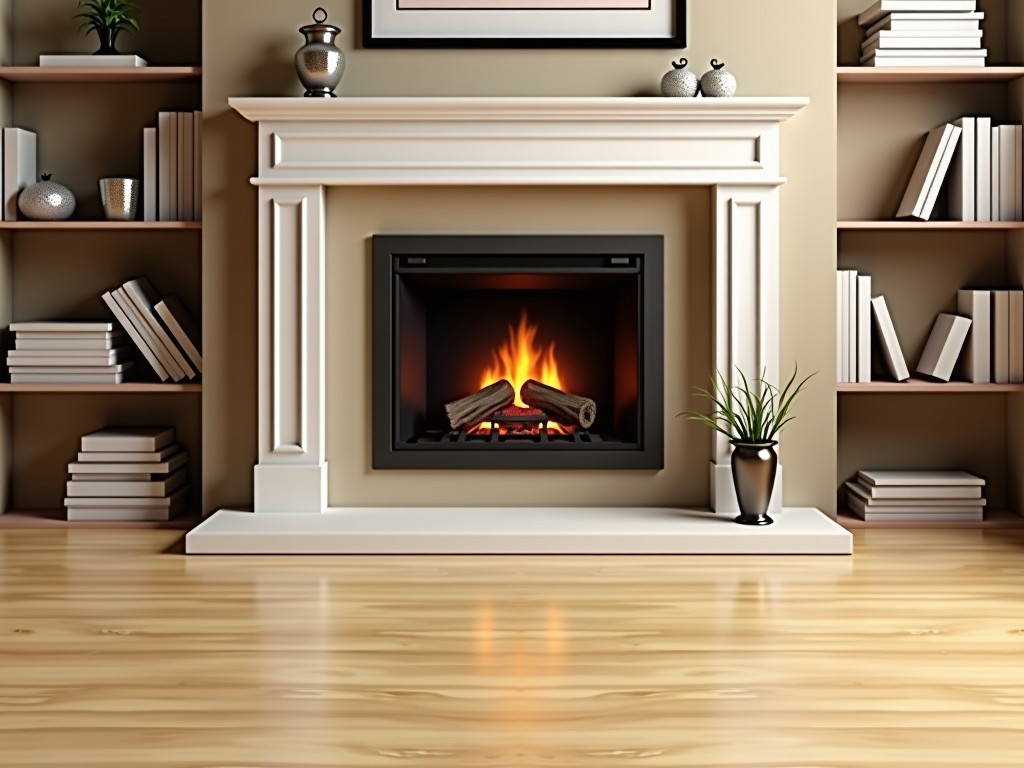
Commercial interior fireplace wall cladding serves as a protective and decorative barrier behind heating appliances in public spaces. It must withstand repeated thermal cycling while maintaining aesthetic integrity over years of use.
Typical systems consist of a non‑combustible calcium silicate core bonded to a fiber‑glass reinforced surface sheet. The core density ranges from 600 to 900 kg/m³, providing sufficient mass to dampen temperature spikes. Surface sheets are available in smooth, textured, or perforated finishes with thicknesses of 3 mm to 6 mm.
Manufacturing begins with slurry casting of the calcium silicate mixture into molds, followed by controlled curing at 80 °C for 12 hours. After curing, the boards are laminated with the chosen surface sheet using a high‑temperature adhesive that retains flexibility up to 250 °C.
In high‑traffic environments such as hotel lobbies, restaurant dining rooms, and conference centers, the cladding shields structural walls from radiant heat while contributing to the overall design theme. Its non‑combustible composition meets Class A fire‑rating requirements, limiting flame spread and smoke development. The material’s low thermal conductivity (≈0.12 W/m·K) reduces heat transfer to adjacent finishes, helping maintain comfortable ambient temperatures. Installation is facilitated by standardized board dimensions and a tongue‑and‑groove edge system that minimizes on‑site cutting. Because the surface can be pigmented or textured, designers can match the cladding to existing stone, wood, or metal finishes without compromising safety.
Quality verification follows a two‑step protocol: dimensional inspection using laser scanners to confirm tolerances of ±0.5 mm on thickness and ±1 mm on length/width, followed by fire performance testing per ASTM E84 to ensure a flame spread index below 25. Adhesion strength between core and surface sheet is measured with a peel test, accepting values greater than 1.5 N/mm to guarantee long‑term durability under thermal cycling.
Customization options address project‑specific needs, including cut‑to‑size panels ranging from 300 mm × 300 mm up to 1200 mm × 2400 mm. Edge profiles can be supplied square, beveled, or with a recessed joint for seamless visual continuity. Surface finishes are available in smooth matte, fine‑grain texture, or custom‑printed patterns, with color pigments matched to RAL or NCS references.
| Property | Typical Value | Customizable According to Project Requirements |
|---|---|---|
| Thickness (mm) | 6‑12 | Yes – specific thicknesses available |
| Density (kg/m³) | 700‑850 | Yes – adjustable via core formulation |
| Thermal Conductivity (W/m·K) | 0.11‑0.13 | Limited – core material dependent |
| Fire Rating (Class) | Class A (ASTM E84) | Standard – meets code |
| Surface Finish Options | Smooth, Textured, Perforated, Custom Print | Yes – custom textures/prints available |
National patents
Vinyl flooring line
K+ SQ.M capacity
Founded