46
National patents
Vinyl cove wall base is a continuous, flexible strip installed at the junction of floor and wall to create a sealed, easy‑to‑clean transition. It prevents moisture ingress, protects wall finishes,
Order this product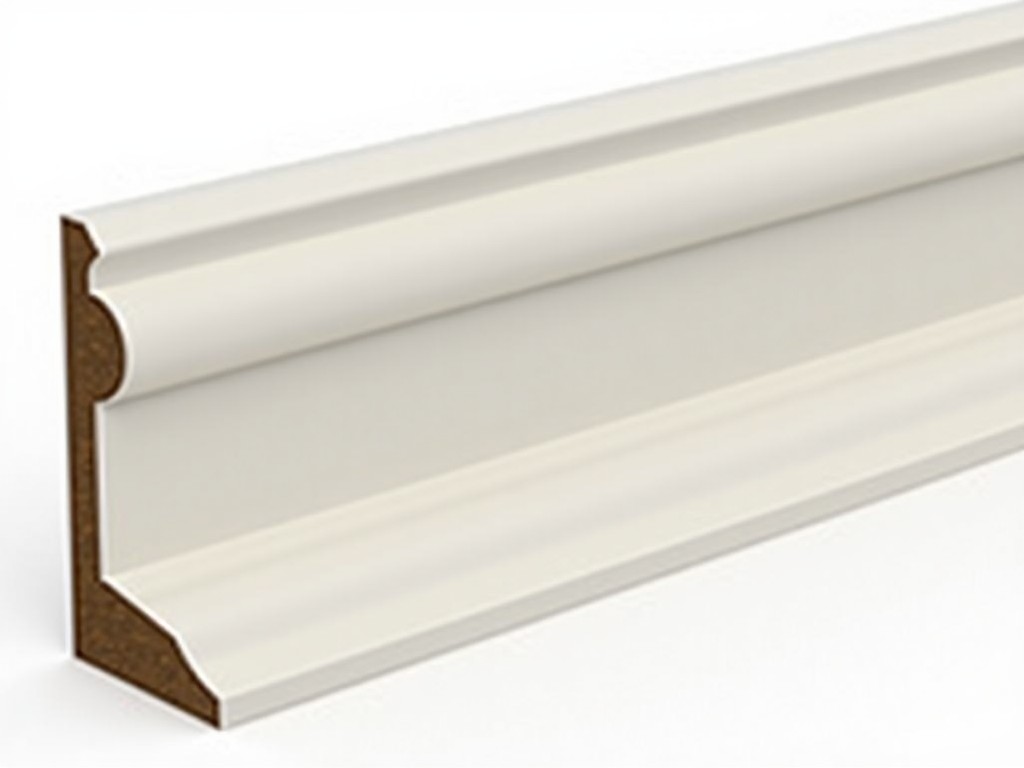
Vinyl cove wall base is a continuous, flexible strip installed at the junction of floor and wall to create a sealed, easy‑to‑clean transition. It prevents moisture ingress, protects wall finishes, and reduces maintenance in environments where hygiene is critical.
As a direct factory producer, we control extrusion parameters, compound formulation, and post‑extrusion cooling to achieve consistent dimensional tolerances and material performance.
The base is formulated from polyvinyl chloride (PVC) resin combined with plasticizers, stabilizers, and pigments. Typical compound contains 55‑60 % PVC, 30‑35 % plasticizer (phthalate‑free alternatives available), and 5‑10 % stabilizers/fillers.
Measured properties include a thickness of 2.5 mm ±0.1 mm, a nominal height of 100 mm, and a length per roll of 20 m. Shore A hardness ranges from 80 to 90, providing sufficient flexibility for conforming to substrate irregularities while resisting indentation.
Tensile strength exceeds 12 MPa, elongation at break is above 150 %, and the material retains flexibility down to –20 °C. Chemical resistance testing shows no swelling after 24 h exposure to 70 % isopropyl alcohol or 5 % sodium hydroxide solution.
Raw PVC compound is fed into a twin‑screw extruder operating at 160‑180 °C. The melt is shaped through a calibrated die that defines the cove profile and wall thickness. Immediately after extrusion, the strip passes through a series of cooling rollers set at 20‑25 °C to lock in dimensions.
In‑line laser gauges monitor thickness and width at 10 mm intervals; feedback adjusts screw speed to maintain tolerance within ±0.1 mm. The product is then wound onto cores with controlled tension to prevent deformation.
Post‑extrusion, samples are cut for accelerated aging (70 °C, 95 % RH for 168 h) and compared against baseline to verify long‑term stability.
In healthcare facilities, the cove base eliminates crevices where pathogens can accumulate, supporting infection‑control protocols. The seamless joint allows wet‑cleaning agents to flow without trapping residue.
Laboratories benefit from chemical resistance; the PVC formulation resists splashes of common solvents and disinfectants without degradation, preserving wall integrity over years of use.
Cleanrooms require low particle generation; the smooth, non‑porous surface minimizes shedding, and the antistatic additive option reduces electrostatic discharge risk.
Retail and hospitality spaces choose vinyl cove for its durability under frequent foot traffic and ease of replacement during refurbishments.
| Property | Typical Value | Test Method / Note |
|---|---|---|
| Material Base | PVC (phthalate‑free optional) | Supplier datasheet |
| Thickness | 2.5 mm ±0.1 mm | Caliper measurement (ISO 1183) |
| Height (cove) | 100 mm | Die dimension |
| Length per Roll | 20 m | Standard roll |
| Shore A Hardness | 80‑90 | ASTM D2240 |
| Tensile Strength | ≥12 MPa | ASTM D412 |
| Elongation at Break | ≥150 % | ASTM D412 |
| Low‑Temp Flexibility | –20 °C (no cracking) | ISO 458-2 |
| Chemical Resistance (24 h) | No swelling in 70 % IPA, 5 % NaOH | Internal immersion test |
| Fire Rating | Class B‑s2, d0 (EN 13501‑1) | Optional additive |
Length can be adjusted from 5 m to 50 m per roll to match project logistics and minimize waste.
Height profiles are available in 75 mm, 100 mm, and 150 mm cove radii, allowing alignment with different floor‑to‑wall transitions.
Color matching follows RAL or Pantone standards; custom pigments can be incorporated without affecting plasticizer balance.
Additives such as UV stabilizers, antimicrobial agents, or antistatic compounds are optional and specified at quotation stage.
Substrate must be clean, dry, and free of oil or loose particles. A compatible acrylic‑based adhesive is applied in a continuous bead with a 2 mm notch trowel.
The cove base is pressed into place, ensuring full contact; a roller with 5 kg pressure is used to eliminate air pockets.
Open time of the adhesive is approximately 15 minutes at 23 °C; full cure develops in 24 hours before exposure to wet cleaning.
Expansion gaps of 3 mm are recommended at every 5 meters to accommodate thermal movement.
Each production lot undergoes dimensional verification using laser micrometers at 0.5 m intervals; average deviation must stay within ±0.1 mm.
Visual inspection checks for surface defects such as bubbles, streaks, or discoloration under 500 lux illumination.
Mechanical samples are pulled for tensile and elongation testing; results are recorded and compared to the specification limits.
Batch documentation includes compound lot numbers, extrusion temperature profiles, and cooling roll speeds, enabling traceability.
For detailed specifications, customization requests, or to arrange a sample shipment, please reach out to our technical sales team.
National patents
Vinyl flooring line
K+ SQ.M capacity
Founded