46
National patents
Wall coverings engineered for living‑room environments combine decorative surface layers with functional backings to meet both aesthetic and performance requirements. Unlike standard residential
Order this product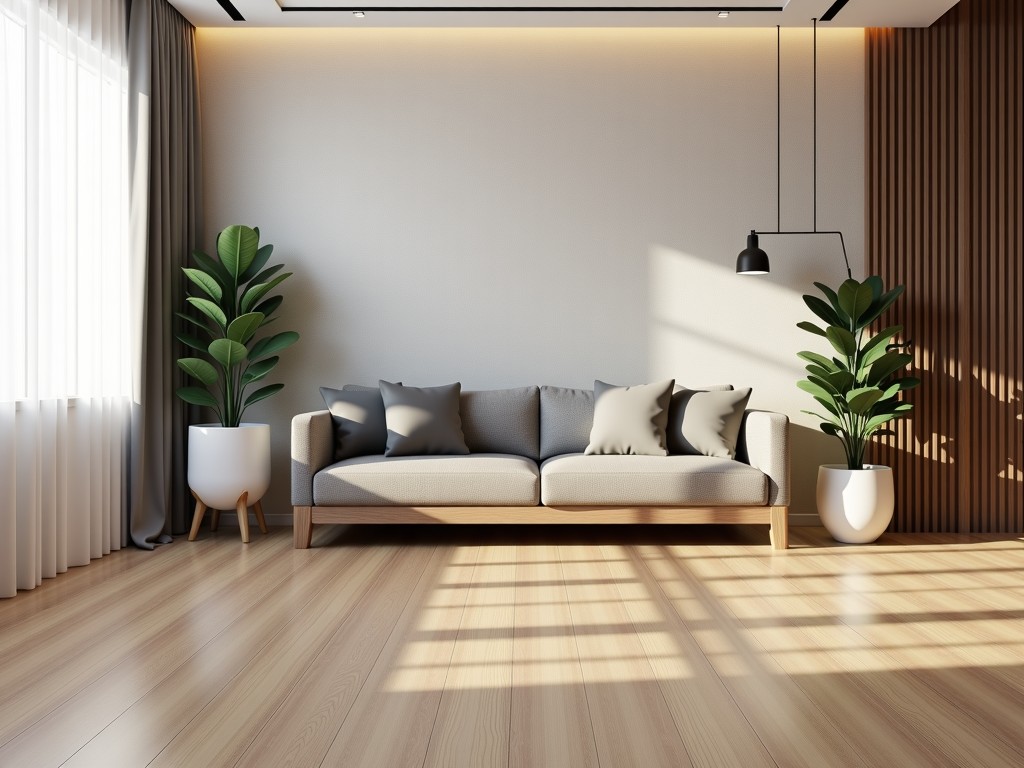
Wall coverings engineered for living‑room environments combine decorative surface layers with functional backings to meet both aesthetic and performance requirements. Unlike standard residential wallpaper, these products are produced in continuous rolls suitable for high‑volume installation in multi‑unit developments, hospitality suites, and commercial interiors where durability and ease of maintenance are critical.
The factory supplies the material in wholesale quantities, allowing contractors and distributors to specify exact roll lengths, widths, and surface finishes without the markup associated with retail channels.
Typical constructions consist of a printed polyvinyl chloride (PVC) film laminated to a non‑woven polyester backing. The PVC film provides surface durability, while the backing contributes dimensional stability and tear resistance.
Standard film thickness ranges from 0.30 mm to 0.50 mm, measured with a micrometer under ASTM D374. Backing weight varies between 80 gsm and 120 gsm, influencing flexibility and handling characteristics.
Additives such as UV stabilizers and antimicrobial agents are incorporated during extrusion to achieve specific performance targets, details of which are available upon request based on project specifications.
Flame spread rating is evaluated according to ASTM E84; most constructions achieve a Class A rating with a flame spread index below 25 and smoke development index under 450.
Abrasion resistance is quantified using the Wyzenbeek method; typical values exceed 30,000 double rubs without noticeable wear, suitable for high‑traffic living‑room walls.
Moisture resistance is assessed via ASTM D1308; the PVC layer shows no delamination or discoloration after 48 hours of continuous water exposure at 23 °C.
Volatile organic compound (VOC) emissions are measured per ISO 16000‑9; products are formulated to emit less than 0.5 mg/m³ of total VOCs after 24 hours, meeting low‑emission criteria for indoor air quality.
Surface patterns are applied via rotogravure or digital printing, allowing repeat lengths from 0.30 m to 1.20 m depending on design complexity. Custom artwork can be supplied in vector or high‑resolution raster formats.
Embossing or texturing rollers create three‑dimensional effects; depth typically ranges from 0.10 mm to 0.40 mm, enhancing tactile appeal and hiding minor substrate imperfections.
Roll widths are available in 0.914 m (36 in), 1.067 m (42 in), and 1.372 m (54 in) standards; slit to narrower dimensions is possible on request. Lengths are supplied in continuous rolls of up to 50 lm, reducing seams during installation.
The process begins with PVC extrusion, where resin, plasticizers, stabilizers, and pigments are melted and formed into a uniform film. The film then passes through a cooling calendar to achieve target thickness and surface finish.
Simultaneously, non‑woven backing is produced via spunbond or meltblown techniques, then coated with an adhesive layer compatible with PVC. The two webs are laminated under heated rollers, followed by embossing or printing stations as required.
Finished rolls are inspected for thickness uniformity, color consistency, and adhesion strength before being slit, wound, and packaged with protective polyethylene film.
In‑line monitoring includes laser thickness gauges with ±0.01 mm tolerance and spectrophotometric color checks maintaining ΔE < 2.0 against approved standards.
Finished goods undergo random sampling for peel adhesion (ASTM D903), with minimum values of 2.5 N/mm for film‑to‑bond interface. Dimensional stability is evaluated after 24 hours at 70 °C/90 % RH, confirming length change below 0.5 %.
All batches are accompanied by a test report citing the relevant ASTM, ISO, or EN standards applied, enabling traceability for project documentation.
Living‑room walls benefit from coverings that resist scuffing from furniture movement, accommodate occasional cleaning with mild detergents, and maintain visual integrity under varying lighting conditions. The specified abrasion and moisture resistance directly address these everyday stresses.
Acoustic performance, though secondary, is improved by the polymeric mass and backing, reducing mid‑frequency reverberation by approximately 1.5 dB in typical room configurations, a measurable advantage in open‑plan layouts.
Because the product is supplied in factory‑direct rolls, contractors can align pattern repeats across large surface areas without the need for multiple roll changes, decreasing installation time and material waste.
| Property | Typical Value | Test Method |
|---|---|---|
| Film Thickness | 0.30 mm – 0.50 mm | ASTM D374 |
| Backing Weight | 80 gsm – 120 gsm | ASTM D3776 |
| Flame Spread Index | < 25 (Class A) | ASTM E84 |
| Smoke Development Index | < 450 | ASTM E84 |
| Abrasion Resistance (Wyzenbeek) | > 30,000 double rubs | ASTM D4157 |
| VOC Emission (24 h) | < 0.5 mg/m³ | ISO 16000‑9 |
| Roll Width Options | 0.914 m, 1.067 m, 1.372 m (custom slit available) | — |
| Maximum Roll Length | Up to 50 lm | — |
Yes. Roll width, length, and pattern repeat can be adjusted to project specifications. Custom slitting to non‑standard widths is available upon request, with minimum order quantities discussed during quoting.
To provide an accurate quote we need the desired surface finish (print, emboss, plain), total square meters, preferred roll width, any performance criteria (e.g., fire rating, VOC limits), and delivery destination. Artwork files should be supplied in PDF, AI, or high‑resolution TIFF format.
In‑line gauges monitor thickness and color; finished rolls are sampled for adhesion, abrasion, and flame performance per the standards listed in the specification table. All test data are retained for traceability and supplied with the shipment.
Standard packaging includes a polyethylene sleeve around each roll, placed inside a corrugated cardboard tube with end caps. For export, rolls are palletized, stretch‑wrapped, and fitted with corner protectors to withstand handling and moisture.
Lead time depends on order complexity and current capacity, generally ranging from 10 to 20 working days after artwork approval and receipt of deposit. Expedited schedules can be arranged for urgent projects.
For technical data sheets, sample requests, or a formal quotation, please contact our sales team.
National patents
Vinyl flooring line
K+ SQ.M capacity
Founded