Commercial Flooring Types Performance Analysis
Selecting a floor for a high-traffic environment is rarely about aesthetics alone; it is a strategic decision involving load-bearing capacity, hygiene standards, and lifecycle costs. The wrong choice can lead to premature degradation, increased maintenance overhead, and potential safety hazards in commercial spaces.
Modern facility management now prioritizes materials that offer a balance between durability and sustainability. From the sterile requirements of a surgical suite to the heavy-duty demands of a warehouse, the technical specifications of the material must align precisely with the operational reality of the space.
To navigate this complexity, understanding the various types of commercial flooring is essential for architects, contractors, and business owners aiming to optimize their infrastructure for long-term performance.
The Evolution of Commercial Surface Materials
Historically, commercial spaces relied on rigid materials like stone or concrete, which offered durability but lacked ergonomic comfort and hygiene control. The shift toward resilient flooring, particularly vinyl-based solutions, occurred as the industry sought materials that could absorb shock while resisting chemical penetration.
Today, the focus has shifted from mere durability to "functional specialization." This means flooring is no longer a passive surface but an active component of the building's utility—providing antibacterial properties in hospitals or anti-static capabilities in data centers.
Technical Architecture of Vinyl Flooring
The performance of commercial vinyl is determined by its structural composition. Heterogeneous flooring consists of multiple layers—typically a backing layer, a printed design layer, and a transparent wear layer. This allows for highly complex visual patterns (like wood or stone) while maintaining a protective shield on top.
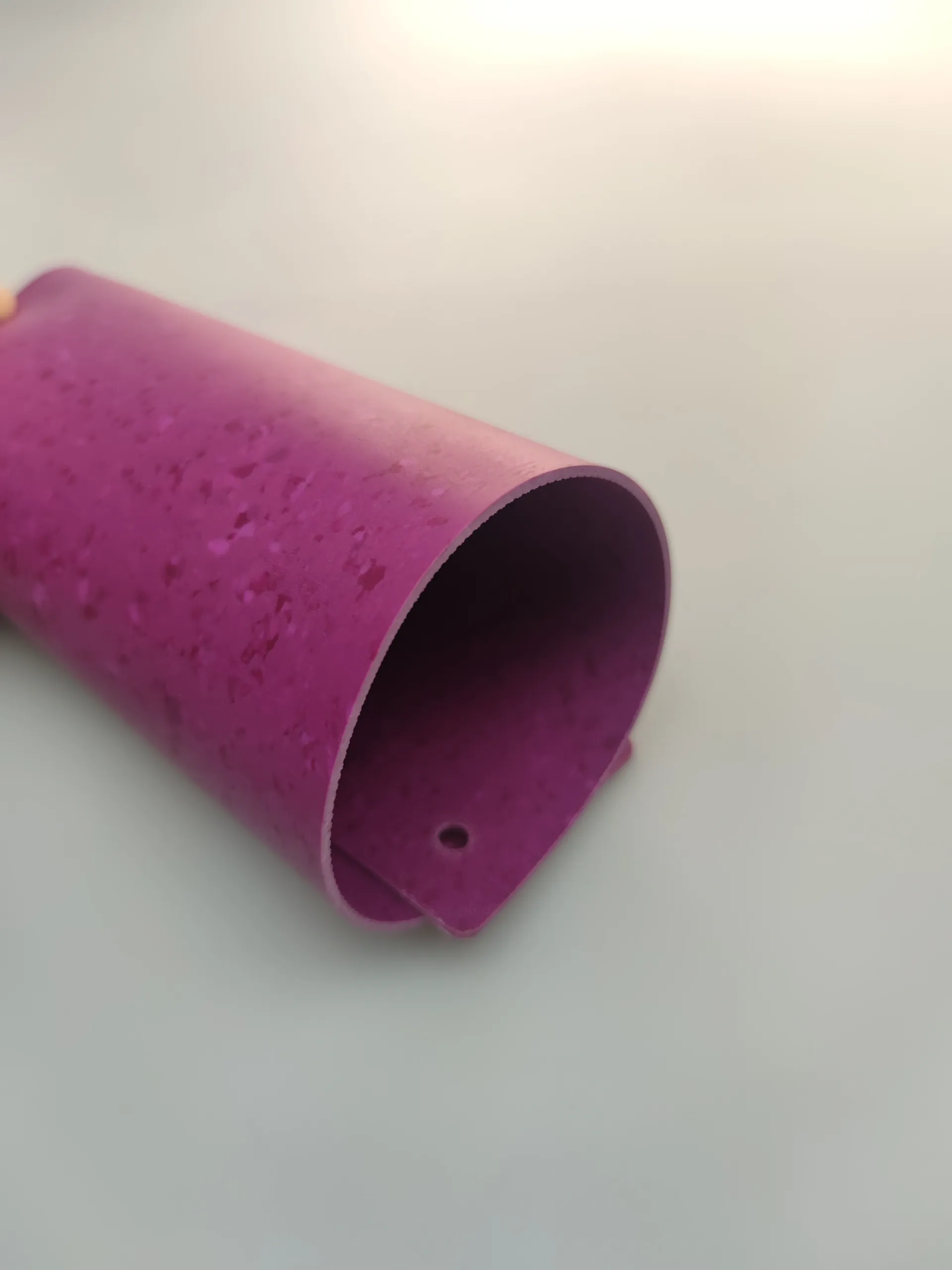
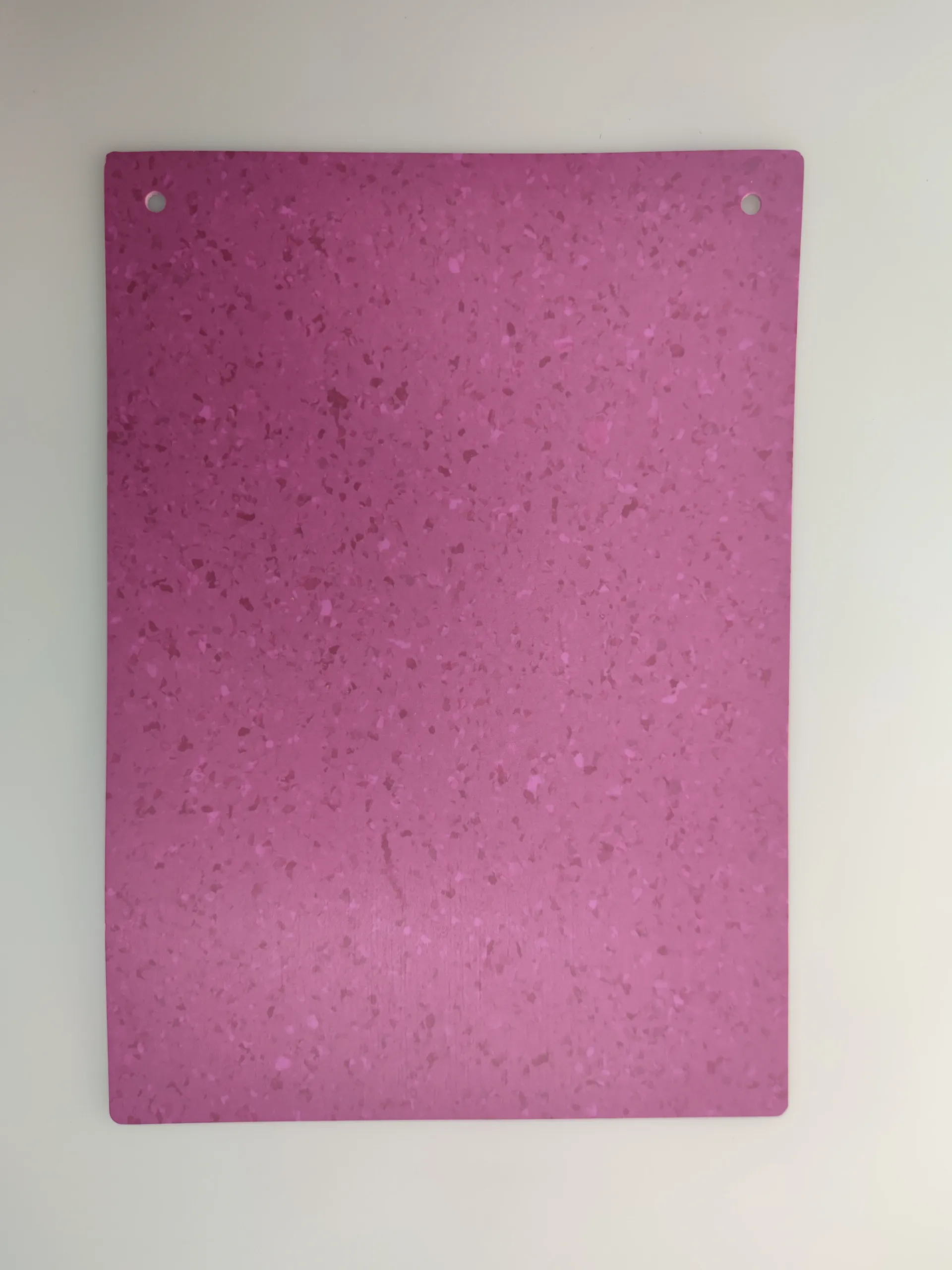
In contrast, homogeneous flooring is engineered as a single, consistent layer throughout its entire thickness. This structural uniformity means that the color and pattern are not just on the surface; they are integral to the material. If the surface is scratched or worn down, the appearance remains unchanged because the material is identical from top to bottom.
The integration of advanced additives has further enhanced these structures. For instance, the addition of conductive particles allows for the dissipation of static electricity, while antibacterial agents are embedded into the matrix to inhibit microbial growth, meeting the stringent requirements of healthcare environments.
Decoding the Homogeneous Advantage
When analyzing the long-term value of flooring, the "wear layer" is the primary point of failure. In multi-layered products, once the wear layer is breached, the design layer is exposed and the floor must be replaced. Homogeneous vinyl bypasses this risk by eliminating the separate wear layer entirely.
Homogeneous vinyl provides a consistent material profile throughout its cross-section, ensuring that vibrancy and depth of color are maintained even under extreme abrasive stress, making it the ideal choice for high-traffic public corridors.
Enlio’s Puenie collection exemplifies this approach, offering specialized ranges such as Antibacterial, Conductive, and Heavy Duty vinyl. By utilizing a single-layer construction, these products achieve high density and anti-penetration properties that prevent pollutants from seeping into the subfloor.
Comparative Performance Indices
Evaluating different types of commercial flooring requires a qualitative assessment of their strengths relative to specific stressors. Factors such as slip resistance, fire rating, and maintenance effort vary significantly between SPC, LVT, and Homogeneous Vinyl.
The following index illustrates the relative suitability of common commercial materials across five critical performance dimensions. These values are conceptual markers based on industry standard material properties.
Figure 2. Relative Performance Index by Material Type
Application-Specific Deployment Scenarios
In a healthcare setting, the priority is an airtight, seamless surface that prevents the accumulation of pathogens. Here, homogeneous antibacterial vinyl is the standard because it can be heat-welded at the seams using specific welding rods, creating a monolithic floor that is impervious to liquids and easy to disinfect.
Conversely, in corporate offices or retail environments, the priority shifts toward visual branding and acoustic comfort. LVT (Luxury Vinyl Tile) or SPC (Stone Plastic Composite) are often deployed here due to their ability to mimic natural wood or stone and their rapid installation process, which minimizes business downtime.
Sustainability and Circular Economy Trends
The flooring industry is currently undergoing a transition toward circularity. The traditional "linear" model—extract, manufacture, discard—is being replaced by a focus on recyclable raw materials and the elimination of harmful volatile organic compounds (VOCs).
A significant technical stride in this area is the development of adhesive-free installation methods. By removing the need for chemical glues, the flooring can be more easily removed and recycled at the end of its life cycle, reducing the environmental footprint of facility renovations.
Enlio has integrated these principles by emphasizing zero formaldehyde emissions and increasing recycled content in their product lines. This approach ensures that commercial spaces not only meet current building codes but also align with global sustainability certifications like ISO14001 and RoHS.
Strategic Selection Framework
Choosing the right flooring requires a cross-referencing of operational needs against material limitations. A common mistake is selecting a material based on initial cost without calculating the total cost of ownership (TCO), which includes maintenance, cleaning chemicals, and replacement frequency.
The decision process should follow a logical hierarchy: first, identify the primary stressor (e.g., chemical spills, heavy foot traffic, or static electricity); second, determine the hygiene requirement; and third, evaluate the installation timeline.
The following framework provides a relative suitability guide for the most common types of commercial flooring based on these professional criteria.
| Material Type | Primary Use Case | Maintenance Level | Durability Rating |
|---|---|---|---|
| Homogeneous Vinyl | Hospitals / Labs | Low (Seamless) | Very High |
| Heterogeneous Vinyl | Offices / Schools | Medium | High |
| SPC Flooring | Retail / Commercial | Low | High |
| LVT Laminate | Boutiques / Hotels | Medium | Medium |
| Conductive Vinyl | Server Rooms / ESD | Low | High |
| WPC Flooring | Residential/Light Comm | Low | Medium |
Questions & Answers
Homogeneous vinyl is composed of a single, uniform layer of material throughout its entire thickness, meaning the color and pattern are consistent from top to bottom. Heterogeneous vinyl consists of multiple layers, including a backing and a separate wear layer on top. Consequently, homogeneous vinyl is generally more durable in high-traffic areas as it does not rely on a thin top layer for its properties.
Antibacterial homogeneous vinyl is typically the best choice for sterile environments. Its single-layer density prevents penetration, and its ability to be heat-welded creates a seamless surface that eliminates crevices where bacteria and fungi can grow. This makes it significantly easier to maintain hygiene standards compared to tiled or multi-layer options.
Conductive vinyl contains specialized conductive particles embedded in the material that allow static electricity to flow across the floor and into a grounding system. This prevents the buildup of electrostatic discharge (ESD), which could otherwise damage sensitive electronic components in data centers or laboratories.
SPC (Stone Plastic Composite) is excellent for retail and office spaces due to its rigidity and water resistance. However, it may not be suitable for areas requiring extreme hygiene (like operating rooms) because it cannot be seamlessly welded like vinyl sheets, and it may lack the ergonomic cushioning required for staff who stand for long durations.
Adhesive-free installation reduces the use of chemical glues, leading to lower VOC emissions and improved indoor air quality. From a sustainability perspective, it facilitates a circular economy because the flooring can be removed without damaging the subfloor and can be recycled more efficiently than glued-down materials.
Life cycle cost should be calculated by adding the initial purchase and installation cost to the projected maintenance costs (cleaning and polishing) and the anticipated replacement cost over 10-20 years. Materials like homogeneous vinyl often have a higher initial cost but a much lower TCO due to their extreme longevity and minimal maintenance requirements.
Final Thoughts
The selection of commercial flooring is a technical exercise in risk mitigation. By aligning the material's structural properties—whether it be the single-layer consistency of Puenie homogeneous vinyl or the rigid stability of SPC—with the specific operational stressors of the environment, facility managers can ensure safety and longevity.
As the industry moves toward a circular economy, the emphasis will increasingly shift toward zero-emission materials and recyclable installation methods. Investing in high-performance, sustainable flooring is no longer just an operational choice, but a commitment to long-term environmental and financial stability.